





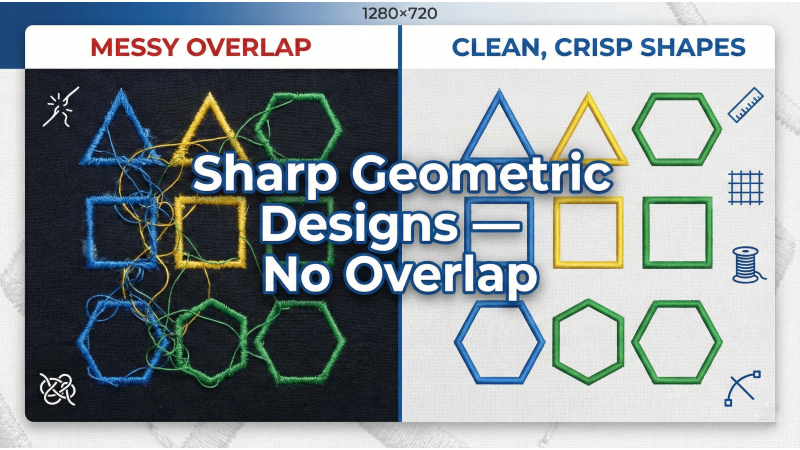
How to Create Sharp Geometric Designs Without Stitch Overlap
Geometric embroidery has become one of the most influential design trends in 2025, bringing a clean, modern, and highly structured aesthetic to apparel, caps, uniforms, jackets, and luxury streetwear. Brands prefer geometric motifs because they communicate precision and professionalism, making them perfect for both boutique fashion and corporate identity. With the rise of geometric vector art, designers are also exploring stronger line work and symmetrical concepts—principles beautifully explained in guides like 10 Tips to Create Geometric Vector Graphics, which help artists understand how shape logic translates into embroidery-ready artwork.
However, geometric designs also highlight every digitizing flaw. A corner that isn’t sharp, a density jump, wrong pull compensation, or overlapped stitches becomes immediately visible. This is why experienced digitizers rely on advanced embroidery frameworks such as those discussed in Maggie Frame’s guide on mastering geometric machine embroidery, which emphasizes structure, stability, and shape clarity. Whether you are creating triangles, hexagons, isometric illusions, blocks, or mandala-like symmetry, the rules for preventing overlaps remain the same.
Before diving deep into the techniques, many digitizers also find inspiration by studying geometric motif variations, such as the unique patterns featured on EmbDesignTube's geometric applique collection. These designs demonstrate how precise angles and balanced stitching can create a bold, high-quality finish when digitized properly.
1. Use Proper Pathing — Avoid Double Stitching on Corners
Pathing is the structural backbone of any geometric embroidery file. A cleanly optimized sequence ensures that no corners receive extra stitches, no edges are repeated unnecessarily, and no overlaps occur. When the sewing order jumps around, the design becomes bulky, especially at tight intersections.
Correct pathing ensures:
- No thread buildup around corners
- Smoother machine flow
- Sharper visual structure
- Perfect alignment in multi-block patterns
If you want to understand how pathing errors appear during stitching, you can watch breakdowns in videos such as this geometric embroidery guide, which demonstrates how poor routing creates overlaps even when the artwork is perfect.
2. Keep Density Consistent Across All Shapes
Density inconsistencies cause some shapes to appear heavier while others look lighter. In geometric embroidery, this visual imbalance becomes extremely noticeable. If two adjacent blocks have different densities, the thicker one may push into its neighbor, causing unintended overlap.
To maintain consistency:
- Use uniform density for all fills of the same color.
- Avoid overly dense stitching for very small shapes.
- Test density on actual fabric before finalizing the design.
For deeper visual examples, videos like this stitching breakdown show how density affects shape sharpness and stitch flow.
3. Set Underlay Correctly for Crisp, Stable Edges
Underlay determines whether a geometric shape looks structured or unstable. Edge-walk underlay is ideal because it reinforces shape boundaries without adding bulk. A center-run underlay supports the interior and prevents fabric distortion.
Avoid zigzag underlay for narrow geometric elements; it introduces unnecessary thickness and can cause overlapping edges.
To see how professional embroiderers use underlay to stabilize sharp corners, consider watching this stitch optimization video, which clearly demonstrates underlay effects on crisp shapes.
4. Control Pull Compensation Carefully
Geometric embroidery requires extremely precise pull compensation. Too much, and edges bulge or overlap. Too little, and the fabric contracts inward, rounding off corners.
Ideal settings:
- 0.1–0.3 mm adjustment for most fabrics
- Increase slightly for thick textiles
- Measure each shape individually instead of applying one global setting
For real-world pull compensation examples, this technical analysis video explains why overshoot compensation can destroy geometric clarity.
5. Use Shorter Stitch Length on Tight Corners
Geometric shapes often include sharp angles that require micro-level stitch precision. Long stitch lengths force the machine to “curve” around points, destroying the crisp geometry.
To prevent rounding:
- Shorten stitch lengths near corners
- Use micro-stitches for very small geometric units
- Apply run-stitch outlines before fills for extra reinforcement
6. Balance Stitch Direction for Visual Uniformity
One of the biggest artistic challenges in geometric embroidery is choosing stitch angles that maintain visual rhythm and balance. While variation adds texture, abrupt angle flips create thick seams where stitches collide.
Maintain logic across the design:
- Use mirrored angles for symmetrical shapes
- Avoid large angle jumps between adjacent blocks
- Plan angle flow before digitizing fills
Watching real-time geometric angle changes, such as in this embroidery demonstration, helps digitizers understand how stitch flow affects clarity.

7. Ensure Proper Fabric Stabilization
Even the best-digitized geometric design fails without proper stabilization. Stretchy, loose, or poorly hooped fabric results in shifting, causing shapes to overlap or warp.
Use:
- Cut-away for knits or stretch fabric
- Medium tear-away for cotton and structured textiles
- Two layers for dense geometric patches
8. Follow the “Shape First, Texture Second” Rule
This golden rule prevents 90% of geometric digitizing issues. Many beginners design texture or fill patterns first, and only afterward define shape boundaries. This leads to misaligned edges and overlaps.
The professional process:
- Create the shape outline first.
- Ensure accuracy in corners and straight edges.
- Add fill texture only after confirming boundary precision.
- Run a mini test stitch-out to confirm crispness.
Conclusion
Mastering geometric embroidery requires extreme precision. These designs reveal every flaw—but when executed properly, they look luxurious, modern, and highly professional. By applying correct pathing, consistent density, the right underlay, and carefully controlled pull compensation, you can eliminate stitch overlap completely. For even more inspiration and structural guidance, explore geometric applique concepts like those on EmbDesignTube’s geometric collection and watch technical videos such as this embroidery tutorial.
When geometric shapes are digitized with discipline and structure, they become one of the strongest elements in fashion, branding, and modern textile design—crisp, clean, and unmistakably premium.

Leave a comment