





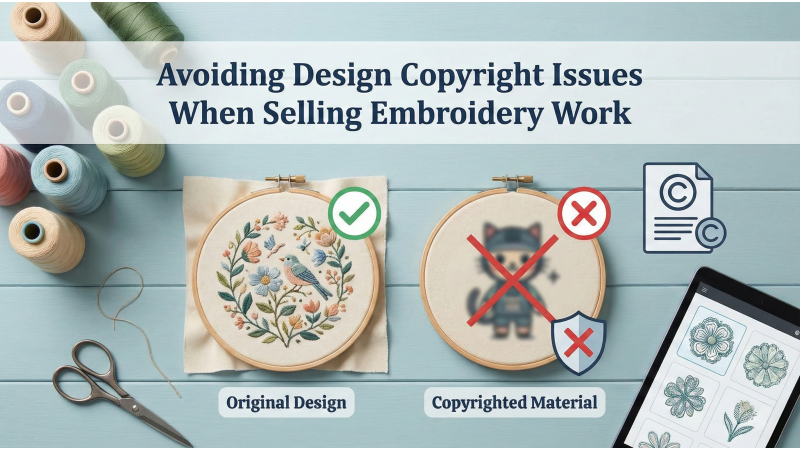
Avoiding Design Copyright Issues When Selling Embroidery Work
Copyright laws play a major role in the embroidery industry, yet many embroiderers and small business owners unknowingly violate them. From digitizing artwork to selling finished embroidered products, nearly every step involves legal responsibilities. To fully understand the do’s and don’ts of embroidery copyright, it helps to learn from trusted industry resources. For example, this detailed guide from MegaDigitizing explains important rules every embroiderer should know: Copyright Laws for Embroidery Designs .
Whether you're working with logos, characters, lettering, or custom art, knowing what you legally can or cannot use is essential. Many embroiderers also turn to expert education platforms such as Kimberbell, who offer a clear explanation of licensing and usage rights here: Understanding Copyright & Licensing for Embroidery Designs .

Understanding the Basics of Copyright
Copyright protects original creative works—artwork, characters, illustrations, logos, or written materials. The creator has exclusive rights to reproduce or sell their work. Simply converting an image into stitches does not remove copyright, a point explained in detail in many educational videos, like this helpful overview on YouTube: Embroidery Copyright Basics.
If you digitize a copyrighted cartoon, movie character, or sports logo, you are still infringing unless you have permission. Even fan art, artwork provided by customers, or online images cannot be used commercially without licensing.
Can You Legally Sell Embroidery With Popular Characters or Logos?
Many embroiderers ask whether they can sell products featuring famous characters or brand logos. The answer is usually “no” without a commercial license. Most of these elements are protected by copyright or trademark. Even creators who think “I am just digitizing it myself” are still creating derivative copyrighted work.
To better understand why this is risky, here is another useful YouTube explanation that breaks down how characters and logos fall under copyright restrictions: Can You Use Characters in Embroidery?.
Embroidery Copyright Basics for Business Owners
A common misunderstanding is the difference between owning embroidery software and owning rights to artwork. Copyright applies to:
- Digitized embroidery created from copyrighted images
- Downloaded embroidery files that forbid commercial use
- Brand logos and trademarked content
- Famous characters, mascots, or illustrations
Even free or purchased designs usually come with usage rules. Always check the terms before selling anything stitched from an embroidery file.
When You Need a License
If you want to sell products using copyrighted artwork—characters, logos, brand graphics, or movie themes—you typically must obtain a license. A commercial license grants permission from the copyright owner to use their intellectual property.
Many embroiderers are unaware of these licensing rules, which is why this video is an excellent resource: Licensing Explained for Embroidery Designers.
Public Domain and Copyright-Free Options
Some works fall into the public domain, meaning their copyrights have expired. These can be freely used in your embroidery business. However, always verify the artwork’s status—many images posted online are shared illegally.
Original artwork you create yourself is automatically copyrighted, and you hold full rights to use, sell, or digitize it.
What About Sewing or Craft Patterns?
Many crafters misunderstand rules surrounding sewing, quilting, and embroidery patterns. Even when you buy a pattern, the creator may allow only personal-use stitching. These restrictions remain valid even if you modify, digitize, or redraw elements from the pattern.
Handling Customer Requests for Trademarked Designs
Customers frequently request sports team logos, cartoon characters, or movie graphics. Even if customers provide the artwork, you are legally responsible for stitching it. Many embroiderers have faced legal issues because they assumed customer-provided artwork was safe to use.
Use Licensed or Original Designs to Stay Safe
To avoid copyright problems, use:
- Your own original artwork
- Designs purchased with clear commercial licenses
- Verified public domain images
- Graphics commissioned from an artist or digitizer
These options keep your business legally safe and protect your reputation.
Protecting Your Own Embroidery Designs
If you create original embroidery files, they are automatically protected by copyright. Registering your work offers stronger protection. You can also set clear “Terms of Use” for your digital embroidery files to prevent unauthorized sharing or redistribution.
Conclusion
Understanding copyright is essential for anyone running an embroidery business. By using original artwork, licensed designs, or verified public domain resources, you can run your business with confidence. Always read license agreements carefully and avoid copyrighted characters or logos unless you have permission. With the right knowledge, you can protect both your creative work and your embroidery business from legal trouble.
Leave a comment