





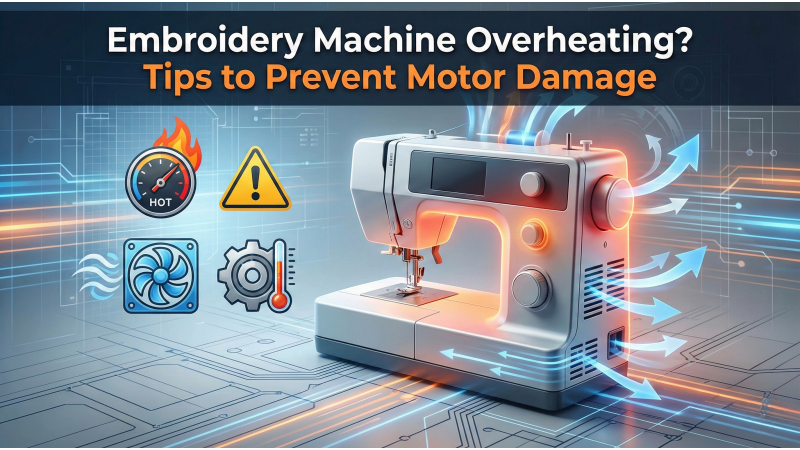
Embroidery Machine Overheating? Tips to Prevent Motor Damage
Embroidery machines perform thousands of stitches per minute, which means the motor, belts, sensors, and electronics work continuously. During long runs or poorly ventilated environments, the machine may start overheating. Heat buildup can lead to thread breaks, speed fluctuations, or in serious cases, permanent motor damage. This guide explains why embroidery machines overheat and how you can protect your machine for long-term performance.
For more embroidery knowledge and troubleshooting support, explore: EmbDesignTube.
1. Why Embroidery Machines Overheat
Overheating can come from fabric resistance, poor ventilation, clogged air passages, lint around the motor, long-running designs, or high room temperatures. Machines with stepper motors or servo motors may heat faster due to friction and constant torque during embroidery.
A practical explanation of common overheating situations is covered here: Dravon Works – Embroidery Machine Overheating.
2. Motor Heating Due to Continuous High-Speed Stitching
Running a machine at maximum speed for extended periods generates significant motor friction. Over time, the motor casing, belts, and bearings heat up. This can also trigger thermal protection systems and cause the machine to pause or shut down.
The Lejia Embroidery resource explains this well, particularly the role of stepper motor load: Lejia Embroidery – Motor Heating Guide.
3. Poor Ventilation and Blocked Cooling Paths
Embroidery machines need airflow around the motor area. When dust, thread pieces, or lint block the back vents, the machine retains heat. Placing a machine inside a cabinet or near a wall also reduces necessary airflow.
To improve ventilation:
- Move the machine away from walls.
- Clean rear vents regularly.
- Use a small fan near the machine during long embroideries.
- Keep the room temperature moderate.
4. Lack of Lubrication or Mechanical Friction
When internal parts dry out or the machine lacks lubrication, the motor works harder than normal. This increases friction and heat production. Over time, unlubricated components can seize or wear out prematurely.
For proper lubrication guidance, refer to: Ibaima – Embroidery Machine Maintenance.
5. Lint Buildup Around the Motor, Belts, or Hook Area
Lint behaves like insulation when it gathers around the motor or inside the machine. It traps heat and forces the motor to work harder during stitches. Regular cleaning helps the machine run cooler and smoother.
Clean the following areas frequently:
- Under the needle plate
- Bobbin case and hook area
- Motor housing vents
- Upper thread path
- Belt wheels

6. Long-Duration Embroidery and Heavy Designs
Designs with long runs, dense fills, or thick stabilizer require the motor to maintain higher torque. Running the machine for several hours without pause naturally increases heat.
To avoid overheating during long projects:
- Take periodic breaks between color changes.
- Reduce machine speed for dense areas.
- Use lighter stabilizer when possible.
- Ensure the design is properly digitized with balanced density.
7. External Heat Sources and Poor Room Conditions
A hot room warms the motor faster than usual. Machines placed near windows, sunlight, or heat-producing appliances may overheat more often. The ideal environment is a cool, dry room with steady airflow.
8. Belt Tension and Mechanical Resistance
When the drive belt becomes too tight or too loose, the motor experiences irregular load. This resistance increases heat output and causes inconsistent stitching.
Proper servicing can prevent belt-related overheating and avoid unnecessary motor stress.
9. Electronic Overload or Faulty Sensors
Some machines pause or beep when internal sensors detect excessive heat. These sensors help protect the motor from damage. If the sensor activates frequently, the machine may have an internal electrical issue that needs servicing.
To understand general overheating behavior, watch this helpful explanation: YouTube – Embroidery Machine Overheating Overview.
10. Professional Maintenance When Overheating Starts Frequently
If your machine overheats multiple times per project, the issue may be deeper than simple cleaning or lubrication. A technician can check motor resistance, belt alignment, electrical faults, and overall internal condition.
For long-term performance, combine regular cleaning with proper operating habits and correct machine environment.
Conclusion
Embroidery machine overheating is a common issue, especially during long stitching sessions or dense designs. With proper ventilation, lubrication, cleaning, and smart operating speeds, you can protect your machine from excessive heat and prevent motor damage. Consistent maintenance ensures smoother stitching, better performance, and longer equipment life.
Related Products
Leave a comment