





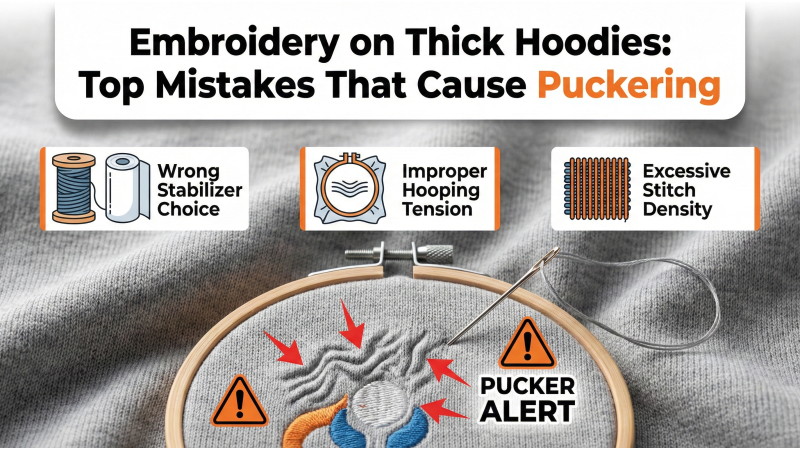
Embroidery on Thick Hoodies: Top Mistakes That Cause Puckering
Thick hoodies are the loyal winter giants of custom apparel—warm, sturdy, and beloved by brands, sports teams, streetwear creators, and small embroidery businesses alike. Yet beneath their cozy fleece hides a fabric temperament that demands respect. Hoodie embroidery can look immaculate… or it can pucker, warp, ripple, and sink like a soft hillside after rain. When the machine, design, and fabric aren't in harmony, distortion appears instantly.
Before we dive deep, watching a few demonstrations—such as this hoodie stabilization tutorial and this detailed hooping walkthrough— can give you a visual foundation for smoother hoodie embroidery.
This complete guide explains why puckering happens on hoodies and how to eliminate it using stabilizer science, hooping discipline, smart digitizing, and machine calibration. Whether you're stitching premium fleece, thick cotton-blends, or fashion-weight hoodies, these solutions will help your embroidery sit flat and flawless.
1. Using the Wrong Stabilizer for Thick Hoodie Fabric
Hoodie fabric has stretch, loft, and density. This means the stabilizer has to work harder than it would on a lightweight tee. Most puckering starts right here: a weak or incorrect stabilizer allows movement during stitching.
Best Stabilizers for Hoodies:
- Two layers of medium-weight cutaway (2.5–3 oz)
- Poly mesh + cutaway combination for heavy-stretch fleece
- Temporary adhesive spray to keep layers bonded
Never use tearaway for hoodies—it simply cannot control the textile’s stretch. For more insights into how stabilizers influence puckering, this breakdown on hoodie puckering offers helpful technical examples and fabric behavior explanations.
2. Incorrect Hooping or No Hooping at All
Hoodies are thick, bulky, and sometimes awkward to position in a standard hoop. This leads many embroiderers to float the garment, but that choice often causes subtle shifting—one of the biggest culprits behind puckering lines, wrinkled outlines, and distorted shapes.
The Correct Hooping Method:
- Hoop the hoodie and stabilizer together for firm tension
- Avoid stretching the hoodie—keep the fabric flat only
- Use magnetic hoops when possible
- Smooth the material evenly before tightening
Watching a demonstration like this hooping technique video can help you better visualize proper tension across thick fleece fabrics.
3. Excessive Stitch Density in the Embroidery Design
Hoodie embroidery cannot handle heavy-density designs. Dense areas compress the fleece beneath and create tight wrinkles that radiate outward. Many generic designs sold online are digitized for thin cotton—when used on hoodies, they pull the surface inward.
Density Adjustments for Hoodies:
- Lighten satin density
- Avoid overlapping fill blocks
- Use short satin stitches for micro text
- Increase stitch length slightly for fleece
- Digitize with proper underlay for lift
For inspiration on hoodie-friendly design construction, this pullover embroidery guide demonstrates how lighter densities keep fleece stable.
4. Upper Thread and Bobbin Tension Imbalance
Tight upper tension pulls aggressively against hoodie fibers, causing compression and puckering. Thick fleece magnifies tension errors because the thread digs into the material and forces it to gather.
Correct Tension Settings:
- Loosen upper tension slightly
- Avoid overly tight bobbin tension
- Use matching thread brands when possible
- Test tension on scrap hoodie fabric first
A good visual breakdown is available in this detailed tension troubleshooting video, where tension problems are shown clearly on thicker fabrics.
5. Not Using the Right Needle Size for Hoodie Fabric
Hoodies demand robust needle penetration. If the needle is too small, it fights through the fleece, causing skipped stitches, thread splitting, and micro puckering.
Needle Recommendations:
- 75/11 for lightweight hoodies
- 80/12 for standard fleece hoodies
- 90/14 for heavy, thick fleece
- Ballpoint or topstitch needles for very stretchy blends
6. Skipping Water-Soluble Topping on Fleece Hoodies
Fleece loves to swallow stitches. Without topping, satin lines appear fuzzy or sunken. A topping layer—like Solvy—keeps stitches elevated until the design is complete.
Benefits of Using Topping:
- Cleaner edges
- Sharper letters
- More consistent satin shine
- Reduced distortion in outline work
Projects like those shared on this sweatshirt embroidery collection show how topping dramatically improves texture-heavy fabrics.
7. Incorrect Machine Speed for Hoodie Embroidery
High-speed stitching on bulky fabrics causes vibration and pulling. Hoodie embroidery needs slow, deliberate needle movement.
Recommended Speeds:
- 600–750 SPM for most hoodies
- 500–600 SPM for thick satin borders

8. Poor Digitizing Strategy for Hoodie Material
Digitizing for hoodies isn't the same as digitizing for T-shirts. The fabric requires expansion, compensation, and lighter push-and-pull management.
Digitizing Tips for Hoodies:
- Use edge-run + zig-zag underlay
- Reduce density throughout the design
- Widen satin stitches for clarity
- Increase pull compensation on wide columns
- Simplify details that may distort on fleece
To observe digitizing adjustments in action, this design-optimization video demonstrates smart density reduction for thicker fabrics.
And for real-world sweatshirt digitizing inspiration, the workflow shown in this hoodie embroidery project provides a helpful reference.
Final Thoughts
Embroidery on thick hoodies blends technique, structure, and finesse. With the correct stabilizer, secure hooping, well-balanced tension, proper needle, topping support, intelligent digitizing, and controlled machine speed, puckering becomes a problem of the past. Hoodies will stitch smoothly, edges stay crisp, and your embroidery will feel as premium as anything on high-end retail racks.
If you want to explore more hoodie-specific methods, this fleece embroidery tutorial offers further clarity on stabilizing thick garments.
For perfectly optimized hoodie digitizing or custom fleece-friendly designs, you can always explore more resources and support on EmbDesignTube.
Leave a comment