





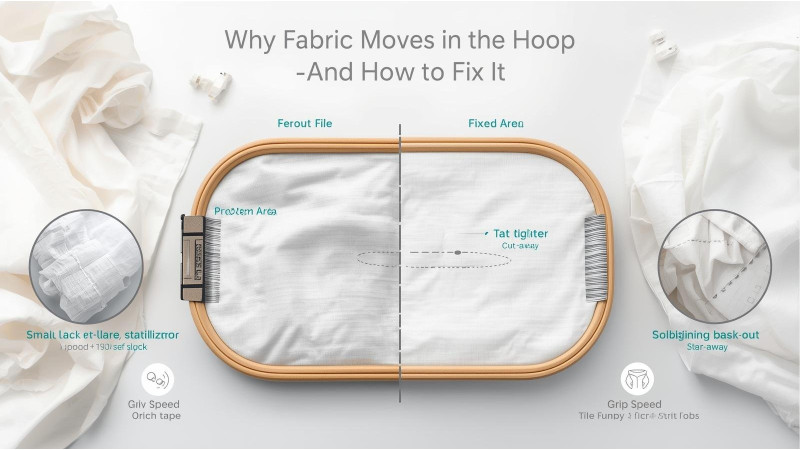
Fabric movement inside the hoop is one of the biggest reasons for puckering, misalignment, gaps between fill and outline, and distorted designs. Whether you embroider on a single-needle machine, multi-needle, or even hand embroidery hoops, the causes are almost always the same—and the fixes are simple once you know what to adjust.
This guide explains the real reasons fabric slips in the hoop and how to fix it with proper stabilizer, hoop tension, fabric prep, and machine adjustments. All external tutorials, videos, and expert guides you shared are included throughout.
1. Wrong or Weak Stabilizer Is the #1 Cause of Fabric Movement
If your fabric is shifting, the stabilizer is either:
- Too soft or thin
- Not hooped tightly
- Not bonded to the fabric
- Wrong type (cut-away vs tear-away vs wash-away)
For detailed stabilizer guidance, check these expert resources:
Tip: For knits, stretchy fabrics, or thin materials, always choose a medium or heavy cut-away stabilizer to prevent stretch and movement.
2. Fabric Not Hooped Tight Enough
Your fabric must be “drum tight” when hooped. Loose fabric = movement during stitching.
Helpful tutorials for hooping technique:
- How to Keep Fabric from Slipping in the Hoop – Beth Colletti
- CrewelGhoul – Keeping Fabric Tight in the Hoop
If tightening the hoop screw still doesn’t hold the fabric, add:
- Hoop tape (grip tape)
- Temporary spray adhesive
- Sticky stabilizer

Why Your Fabric Moves in the Hoop and How to Correct It
3. Fabric Not Bonded to Stabilizer (No Adhesive / No Basting)
Even if the hoop feels secure, the fabric can shift between the fabric and stabilizer layers unless they are properly bonded.
Fixes:
- Use temporary spray adhesive (like 505)
- Use **iron-on stabilizer** for thin fabrics
- Add a **basting stitch box** around the design
Reddit users have posted real examples of this exact problem:
4. Hooping the Wrong Way for the Fabric Type
Certain fabrics require floating instead of hooping directly, including:
- Thick towels
- Caps
- Delicate silks
- Leather
5. Machine Speed Too High
High speed = more vibration = fabric movement.
Reduce speed to **600–800 SPM** for tricky fabrics like knits, rayon, or stretchy materials.
6. Fabric Isn’t Prepped Properly Before Hooping
Certain fabrics must be prepared to avoid shifting:
- Pre-wash stretchy fabrics
- Iron fabric before hooping
- Use **starch spray** to stiffen lightweight material
7. Incorrect Needle or Thread Tension Pulls the Fabric
If thread tension is too high, the needle pulls fabric inward, causing it to shift.
Video reference:
This video explains how spray adhesive and proper stabilizer stop movement mid-design.
Additional Expert Learning Resources
Conclusion
If fabric moves in the hoop, it is almost always caused by hoop tension, stabilizer choice, or lack of adhesion between layers. With the right combination of stabilizer, hooping pressure, fabric prep, and machine settings, you can eliminate fabric shifting permanently.
Related Products

Leave a comment