





Handling Customer Revisions for Custom Embroidery Orders
Managing customer revisions is one of the most challenging parts of running a custom embroidery business. Whether you work with logo digitizing, apparel customization, monogramming, or bulk embroidery production, clients often request multiple edits before giving final approval. Without a proper system in place, repeated revision cycles can delay deliveries, affect worker productivity, and significantly reduce profit margins.
In this extended guide, you’ll learn how to handle revisions professionally, streamline your approval workflow, set boundaries, and prevent revision overload. We also reference several trusted external resources—such as the Embroidery Coach’s customer approval form and insights from Simplify Graphics on managing design revisions—to help you build a stronger business foundation.
Why Customer Revisions Become a Major Problem
Revisions are natural in creative work, but they become a problem when clients send unclear instructions, delay approvals, or change their minds after the stitching process begins. According to professional workflow managers like those at Printavo, unclear expectations and poor workflow planning are the biggest reasons embroidery shops struggle with revision cycles.
When revisions are unlimited or unorganized, production schedules get disrupted. This creates stress, wasted stitches, thread loss, and extended machine downtime—directly impacting profitability.
Create a Clear Approval System Before Stitching
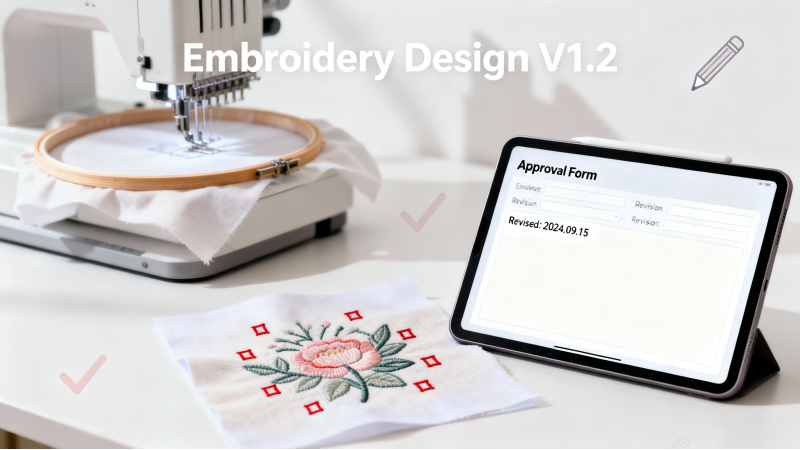
A solid approval process is your first line of defense. Using a professional approval form—such as the one recommended by the Embroidery Coach—helps prevent disputes later. A good approval form includes:
- Customer name and order reference
- Design preview or stitch-out mockup
- Fabric type and placement guide
- Thread color charts
- Stitch count and size details
- Final approval signature
Once a customer signs or approves the mockup digitally, it creates accountability and minimizes confusion.

Limit Revision Rounds to Protect Time and Costs
Unlimited revisions may please customers temporarily but harm your business in the long run. Industry experts and workflow strategists such as Atarim and SimpleStage emphasize the importance of setting boundaries.
A professional embroidery business usually includes:
- 1–2 free revision rounds
- Extra fees for additional changes
- Higher charges for major digitizing modifications
- Hourly pricing for complex alterations
These limitations ensure clients understand that each update requires time, software adjustments, possible test stitching, and re-approvals.
Use Efficient Workflow Management Systems
To avoid miscommunication and disorganization, establish a well-documented workflow. According to professional advice from Printavo’s workflow tips, embedding structure into your embroidery production prevents delays. A strong workflow usually includes:
- Order intake & requirement clarity
- Mockup/draft creation
- Customer approval
- Revision tracking
- Digitizing adjustments
- Test stitching
- Production & quality control
- Packaging and delivery
When the workflow is systematic, your team knows exactly what to do, and customers see consistency in every order.
Track Revision Requests Using Digital Tools
Digital revision platforms—like those discussed in Atarim's revision management guide—help reduce confusion and centralize communication. Instead of scrolling through WhatsApp messages or email chains, you can use tools that track each change, deadline, and design version.
This is especially helpful when you work with corporate clients, bulk orders, or long-term partnerships where many individuals may need to approve the same design.
Set Clear Pricing Rules for Extra Revisions
Understanding how much to charge for additional revisions is a common struggle. The embroidery community often discusses pricing standards, and insights from Reddit’s embroidery pricing discussions show that professionals commonly charge:
- ₹100–₹500 per extra change depending on complexity
- Higher rates for large logo modifications
- Hourly charges for detailed edit cycles
- Additional test-stitching fees if required
Transparent pricing protects your time and encourages customers to provide clearer instructions upfront.
Use an SOP to Keep Your Team Consistent
A Standard Operating Procedure (SOP) ensures every team member follows the same steps for revisions, approvals, communication, and quality control. The embroidery production flow explained at TextileNotes highlights how having a consistent SOP reduces mistakes and maintains professional standards.
Your SOP should include:
- Approval rules
- Revision limits
- Mockup creation workflow
- Digitizing guidelines
- File storage structure
- Communication templates
When everyone knows the process, your embroidery business runs smoothly even during busy seasons.
How to Handle Difficult Clients Professionally
Some clients may consistently request changes beyond what was agreed upon. The best approach is to stay calm, refer back to the approved mockup, and explain how extra revisions impact production time. Customer management advice from UPrinting suggests being polite yet firm, offering alternatives, and keeping communication clear.
Document every update, design version, and conversation. When everything is formally recorded, misunderstandings become rare, and you maintain professional transparency.
Conclusion
Customer revisions are a natural part of the embroidery business, but they don’t need to disrupt your workflow. By using structured approval forms, limiting revision rounds, adopting digital tools, implementing SOPs, and following professional pricing models, you can protect your time and deliver consistent, high-quality results. A well-organized revision process not only improves customer satisfaction but also strengthens your embroidery business for long-term success.
Related Products



Leave a comment