





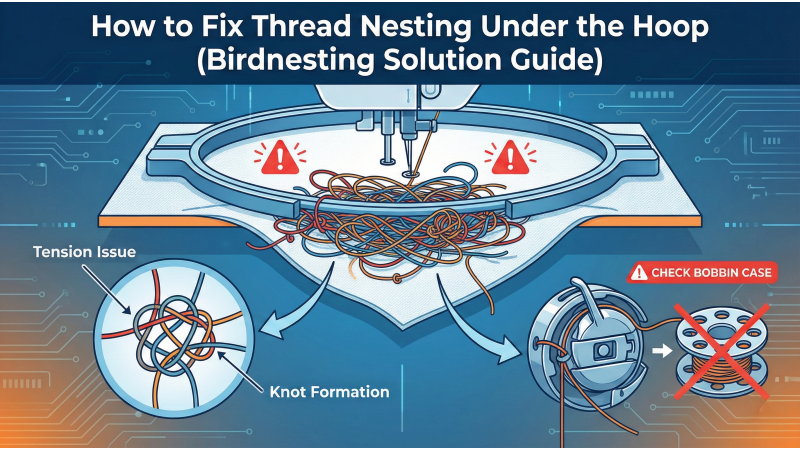
How to Fix Thread Nesting Under the Hoop (Birdnesting Troubleshooting Guide)
Thread nesting under the hoop — often nicknamed birdnesting — feels like the machine suddenly decides to weave a tiny storm cloud behind your fabric. One moment everything runs smoothly, and the next, a dense knot of thread forms under the hoop, locking the project, halting the needle, and fraying your patience.
Fortunately, this problem is entirely fixable. With the right steps and a little technical awareness, you can prevent birdnesting permanently. Below is a complete guide to diagnosing and fixing thread nests, along with helpful tutorials and references placed naturally throughout the content.
What Causes Thread Nesting?
Birdnesting happens when the upper and lower thread lose their synchronized flow. This imbalance typically occurs because of incorrect threading, tension mismatch, bobbin issues, fabric movement, or machine debris. A deeper look into common causes will help you keep your machine running peaceful and smooth.
Cause 1: Incorrect or Incomplete Upper Threading
If the upper thread misses the tension discs or jumps out of the take-up lever, nesting is almost guaranteed. A quickly re-threaded machine can prevent hours of frustration.
- Cut the thread instead of pulling it backward.
- Re-thread the machine from the very first guide.
- Ensure the presser foot is UP when you thread the machine.
- Make sure the thread is properly seated in all tension points.
For a helpful demonstration, check this clear step-by-step rethreading tutorial:
YouTube: Proper Machine Threading & Error Prevention
Cause 2: Bobbin Thread or Bobbin Case Problems
A poorly inserted bobbin, incorrect winding, or lint in the bobbin area can trap thread and pull it into a messy knot. Keeping this part of the machine clean is essential.
- Clean lint and dust from the bobbin area before every project.
- Insert the bobbin in the correct direction according to your machine manual.
- Use evenly wound or quality pre-wound bobbins.
- Check that bobbin tension is not too loose.
For deep guidance on bobbin-related birdnesting, explore this troubleshooting resource:
Maggie Frame: Proven Solutions for Bobbin Thread Bunching
Cause 3: Incorrect Stabilizer or Poor Fabric Stabilization
When fabric shifts during stitching, thread loops can gather under the hoop. A proper stabilizer stabilizes the entire embroidery field so the needle can stitch cleanly.
- Use cut-away for stretchy or knit fabrics.
- Use medium or heavy tear-away for woven fabrics.
- Add temporary adhesive spray for slippery materials.
- Use hooping clips or magnetic hoops to hold layers firmly.
For additional stabilization best practices, this video breaks things down clearly:
YouTube: How to Stabilize Fabric Correctly
Cause 4: Upper Thread Tension Is Too Loose
Loose upper tension lets the bobbin thread pull upward, creating loops underneath. A minor tension adjustment can restore balance.
- Tighten upper tension slightly.
- Use quality thread that feeds smoothly.
- Lower machine speed for dense or delicate designs.
A thorough explanation on tension and birdnesting can be found here:
Embroidery Legacy: Avoid Birds’ Nests in Machine Embroidery

Cause 5: Damaged, Dull, or Wrong Needle Type
A bent or dull needle moves unpredictably, dragging thread into loops and tangles. Regular needle changes keep your machine stitching accurately.
- Replace your needle every 6–8 hours of embroidery.
- Use 75/11 or 80/12 needles for most projects.
- Use ballpoint needles for knits and sharp needles for woven fabrics.
A quick visual explanation of needle issues is available here:
YouTube: Avoiding Needle-Related Thread Issues
Cause 6: Hoop Not Properly Secured
If the fabric isn't tight enough in the hoop, the needle can push it downward, pulling thread beneath the hoop and forming a nest.
- Ensure the hoop is tightened firmly but not overstretched.
- Use adhesive stabilizers for delicate or slippery materials.
- Keep the fabric smooth and level during hooping.
Additional hooping advice appears in this helpful community discussion:
Colman & Company: Birdnesting Prevention Tips
Cause 7: Machine Needs Cleaning or Maintenance
Lint buildup is one of the silent causes of thread nesting. Over time, fibers collect around the hook race and bobbin case, affecting thread flow and causing knots.
- Clean the bobbin area frequently.
- Oil the machine according to the manufacturer’s recommendations.
- Take the machine for professional service if nesting persists.
For a practical breakdown of cleaning steps, this tutorial is useful:
YouTube: Cleaning Your Embroidery Machine for Smooth Stitching
Quick Step-by-Step Fix if Birdnesting Happens
- Stop the machine immediately — avoid forcing it.
- Raise the presser foot to release tension.
- Cut the upper thread gently.
- Remove the hoop carefully to avoid damaging fabric.
- Trim the thread nest from underneath.
- Re-thread both upper thread and bobbin.
- Test-stitch on scrap fabric before continuing.
More Learning Resources
If you want extended guidance on eliminating birdnesting permanently, this video offers a deep dive into real-time troubleshooting:
YouTube: Real-Time Birdnesting Fix & Prevention
And for advanced troubleshooting strategies, this detailed guide breaks down technician-level solutions:
Embroidery Legacy Technical Guide
Conclusion
Thread nesting may feel like a disastrous interruption, but the solution rarely requires more than a thoughtful adjustment. By threading correctly, stabilizing fabric well, using the right needles, maintaining proper tension, and cleaning your machine regularly, you can eliminate birdnesting from your embroidery life.
For more tutorials, troubleshooting guides, and design resources, explore EmbDesignTube — your companion for smooth and frustration-free embroidery.


Leave a comment