





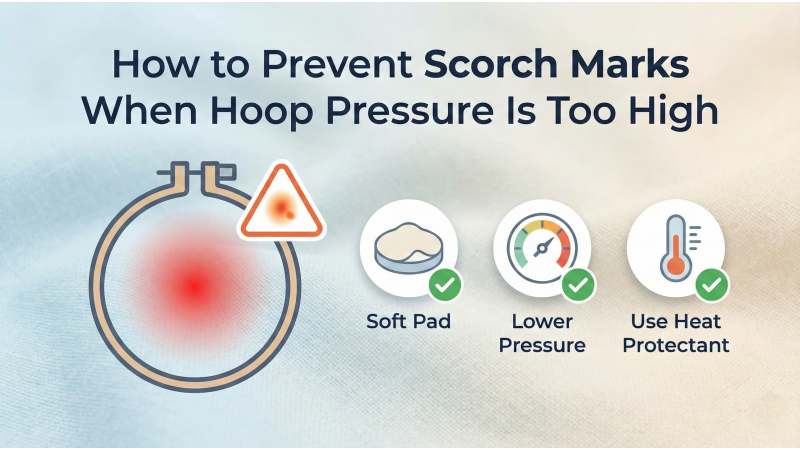
How to Prevent Scorch Marks When Hoop Pressure Is Too High
Scorch marks are the quiet ghosts of embroidery — whispering reminders that hoop tension went a little too far. When pressure climbs, fabrics protest with shine, dark rings, or compressed textures. If your projects have been showing these symptoms, this guide will walk you through practical, fabric-friendly ways to keep hoop pressure tame and embroidery beautifully unmarked.
To deepen your understanding of hoop pressure, tension, hoop burn and fabric care, you can explore detailed breakdowns such as the ultimate hoop burn guide, or technique-focused tutorials like perfecting hoop tension, where fabric-friendly nuances are explored deeply and clearly.
1. Why High Hoop Pressure Causes Scorch Marks
When the inner hoop clamps fabric too tightly, friction rises and the fabric warms up under stress. Polyester, satin, fleece, rayon, velvet and sports materials respond dramatically — leaving shiny halos or pressed rings. You’ll find a comprehensive technical explanation of hoop burn behavior in this professional hoop burn prevention guide.
- Glossy shadow around hoop edges
- Compressed texture that doesn’t rebound
- Darkened spots caused by fabric stress
- Visible outline of the hoop after unhooping
If these symptoms feel familiar, consider reviewing tension balance concepts such as those in this thread tension guide — since upper and bobbin tension can influence surface shine more than expected.
2. Reduce Hoop Pressure Before Starting
Start by loosening the outer hoop screw so the fabric settles in comfortably rather than forcefully. Medium pressure usually supports embroidery beautifully without stressing fibers. Magnetic frames are another safe companion for sensitive fabrics, as they hug gently without locking the cloth between rings.
For practical handling methods, the tutorial on preventing hoop burn with balanced pressure offers a grounded, hands-on perspective.

3. Use Protective Layers Between Hoop and Fabric
A protective buffer tames friction and spreads pressure evenly. You can use:
- Teflon sheets
- Soft cotton or flannel strips
- Water-soluble topping (WSS)
- Thin felt or fleece pads
- Tissue or lightweight paper
If you want to see how hooping can be simplified without stressing the garment, this practical guide on making hooping easier breaks down positioning and pressure handling in an approachable way.
4. Choose the Right Stabilizer
Your stabilizer acts like a quiet, steadying friend between fabric and machine. The wrong type increases friction, pushing the cloth into the hoop too harshly. Choose stabilizers that distribute tension without rubbing:
- Soft cutaway stabilizers
- No-show mesh for delicate fabrics
- Poly mesh for flexible garments
- Adhesive stabilizers for floating
For more stabilizer-based hoop burn prevention methods, explore this stabilizer and hoop burn guide.
5. Use the Floating Method for Sensitive Fabrics
Floating technique saves fabrics that dislike tight spaces. Hoop only the stabilizer, then rest your fabric above it. No direct pressure, no shine, no compression. Ideal for velvet, suede, satin and anything with a raised texture.
You can explore more floating-friendly pressure-free hooping tricks at this fabric-safe hoop burn tutorial.
6. Lower Machine Speed to Minimize Heat
Fast stitching multiplies friction. Slow the machine when working with delicate or easily scorched textiles.
- 500–650 SPM for thin or shiny materials
- 700–800 SPM for medium-weight fabrics
Fewer stitches per minute = lower friction = calmer fabric.
7. Steam or Heat-Relax Hoop Marks Gently
If hoop shadows appear, most can be softened or erased with gentle heat techniques:
- Steam the garment from the wrong side
- Use a warm iron with a pressing cloth
- Lightly mist fibers to encourage rebound
A clear video demonstration of relaxing hoop burns can be seen here: Hoop burn removal video tutorial.
Conclusion
Scorch marks occur when pressure, friction and fabric sensitivity collide. By balancing hoop tension, choosing soft stabilizers, using protective layers and adopting floating when necessary, you can avoid shine marks and preserve the integrity of your fabric. When the hoop becomes gentle, embroidery flourishes without leaving behind unwanted reminders.
For more practical hooping insights, the guide at making hooping easier offers simple, methodical steps. And if you want a structured overview of preventive techniques, this video tutorial gives fabric-safe methods you can use immediately.
Leave a comment