





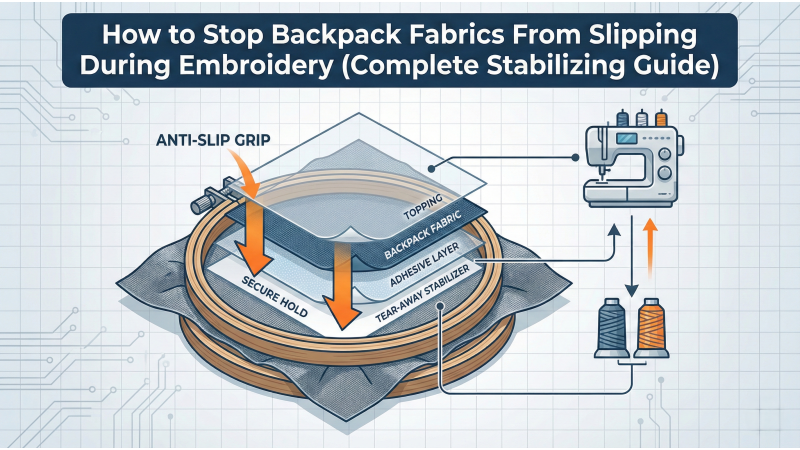
How to Stop Backpack Fabrics From Slipping During Embroidery
Backpacks arrive in the embroidery workspace like rugged little creatures — layered hides of canvas, nylon, ripstop, and polyester stacked over zippers, padding, seams, and pockets. They’re durable, yes, but also unruly. Their uneven surfaces and slippery textures make them shift during stitching, leading to misaligned outlines, distorted shapes, looping threads, and those dreaded wandering satin lines.
Before diving into techniques, it helps to understand how other embroiderers work through similar challenges. Discussions such as this community conversation on tricky embroidery surfaces show how stabilizers, hooping, adhesives, and careful technique can tame even the most difficult materials.
This extended guide walks you through every practical method to prevent backpack fabrics from slipping — whether you’re stitching on school bags, tactical packs, hiking backpacks, or corporate merchandise.
Why Backpack Fabrics Slip During Embroidery
Backpacks are made from strong, structured, multi-layered materials. While these make the bags durable, they also introduce several embroidery challenges:
- Uneven thickness — Padding, seams, and multiple layers cause pressure imbalances inside the hoop.
- Slippery textiles — Nylon and polyester slide easily when the needle penetrates at high speed.
- Rigid areas — Heavy canvas or reinforced zones resist proper hoop grip.
- Padded sections — Lofty layers shift subtly under the foot and needle.
- Tubular shape — The structure of bags makes traditional hooping difficult.
If the fabric isn’t stabilized well, even minor needle movement can shift the material. That is the source of misalignment, looping, and design distortion. Understanding this is half the battle — now let’s fix it.
Solution 1: Use the Proper Stabilizer for Backpack Embroidery
A strong, reliable stabilizer is the real backbone of backpack embroidery. Because the fabric itself generally resists stable hooping, stabilizer selection shapes the outcome dramatically.
A deep exploration of stabilizer behavior and best practices can be found in guides like this stabilizer overview and this stabilizer troubleshooting resource.
For backpacks, the most effective choices include:
- Heavy Tear-Away Stabilizer — Excellent for thick polyester and canvas; tears away cleanly.
- Cut-Away Stabilizer — Necessary for dense stitching or softer inner panels.
- Adhesive Sticky Stabilizer — Best for slippery nylon surfaces.
- Waterproof Topping — Helpful for padded or textured upper layers.
Choosing the correct stabilizer will eliminate at least 50–60% of slippage before you even begin stitching.
Solution 2: Use Temporary Adhesive Spray
Temporary spray adhesive creates a gentle bond between stabilizer and backpack fabric, keeping the embroidery area still without leaving damage or residue.
How to apply it correctly:
- Apply a thin mist across the stabilizer surface.
- Press the backpack gently onto the stabilizer.
- Smooth away wrinkles or trapped air.
This method is especially powerful for slippery nylon or ripstop. If you want a visual demo of stabilizer adhesion and prep, this video tutorial offers a helpful breakdown.
Solution 3: Use a Magnetic Hoop or Clamp Frame
Standard hoops struggle with thick, structured, or slippery backpack fabrics. Magnetic hoops and clamp frames bring even pressure and eliminate the need for over-tightening, which often fails anyway.
Why they work so well:
- They apply strong, even pressure across all edges.
- No strain or excessive tightening required.
- They stabilize thick or padded material beautifully.
- They prevent slipping even during long satin stretches.
For creative uses of clamp-style systems on rugged materials, this backpack embroidery technique post offers excellent examples and workflow inspiration.
Solution 4: Float the Backpack Instead of Hooping
Most backpacks cannot be hooped normally — zippers, seams, layers, and padding fight the hoop at every step. Floating provides a cleaner, safer method.
How to float a backpack:
- Hoop only the stabilizer.
- Attach the backpack surface to the hooped stabilizer using adhesive spray or pins.
- Ensure the embroidery area sits perfectly flat.
- Support the weight of the bag during stitching to prevent drag.
Floating is one of the most reliable ways to achieve perfect alignment on canvas, nylon, or multi-layered backpacks.
Solution 5: Reduce Machine Speed
When stitching thick or slippery materials, high speed introduces vibration — which causes movement and distortion. Slowing down allows the needle to penetrate evenly and gives stabilizers time to “hold their ground.”
Recommended speed:
- 450–650 SPM
Some embroiderers also test different speeds on sample panels for best results. A good example of speed control and technique tuning is shown in this embroidery stability lesson.
Solution 6: Use Proper Underlay Stitches
Underlay is the invisible architecture beneath your embroidery. It compresses the fabric, forms a smooth base, and dramatically reduces fabric shifting — especially on backpacks.
Best underlay options for backpacks:
- Zig-zag Underlay — Provides a strong foundation for filled sections.
- Edge Run Underlay — Keeps outlines razor-sharp.
- Tatami Underlay — Best for broader areas needing stability.
When digitized properly, underlay alone can prevent more than half of your slippage issues.
Solution 7: Choose the Right Needle
Needle type and size decide how the fabric behaves during penetration. Using a dull or oversized needle can drag the backpack fabric, pulling it slightly with every stitch.
Recommended needles:
- 75/11 Sharp — For nylon and polyester surfaces.
- 80/12 Sharp — For mid-weight synthetics.
- 90/14 — For heavy canvas or tactical backpacks.
For a more detailed look at how needle choice affects different heavy materials, this needle-and-fabric breakdown provides clear demonstrations.
Conclusion
Backpack embroidery becomes far more predictable when you combine strong stabilizers, magnetic or clamp-style hooping, temporary adhesives, careful underlay, needle selection, speed control, and — when needed — floating techniques.

These tough materials can seem intimidating, but once stabilized properly, they behave remarkably well. Whether you’re embroidering travel packs, tactical bags, school backpacks, or promotional merchandise, following the methods above will help you achieve crisp, aligned, professional results every time.
For more in-depth techniques, stitching guides, and design resources, you can continue exploring embroidery lessons through this step-by-step tutorial.
Leave a comment