





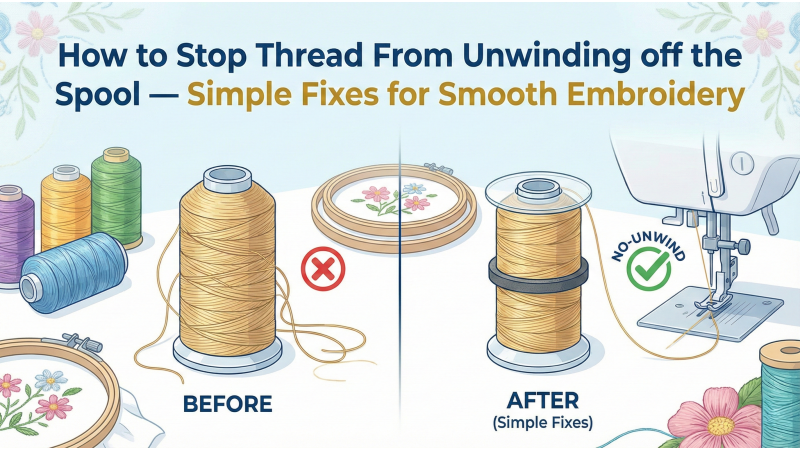
How to Stop Thread From Unwinding off the Spool — Simple Fixes for Smooth Embroidery
When the top thread begins unwinding too quickly or slips off the spool before entering the tension system, the entire embroidery process turns unpredictable. Loops form, tension fluctuates, and stitches become moody little rebels. Although the issue seems tiny, uncontrolled spool rotation affects every stage of your stitch formation. Fortunately, once you understand how thread behaves on different spool types and machines, you can tame the chaos and restore harmony to your thread path.
Before we dive into solutions, it's helpful to understand how other stitchers deal with similar issues. For example, many embroiderers struggle with twisting or jumping thread, and discussions such as this community troubleshooting thread reveal how spool shape, thread twist direction, and machine pull all influence thread behavior. These shared experiences help explain why some spools behave like steady companions while others try to somersault off the machine.
And if your sewing space tends to look like a small thread tornado, organizing spools properly also prevents accidental unwinding. A simple guide like this thread organization tutorial can help keep your spools tidy, balanced, and less likely to loosen while stored or during use.
For visual learners, watching how thread reacts while feeding from different positions can make a world of difference. This quick demonstration shows spool orientation, thread nets, and the “jumping thread” effect in action: Watch the thread behavior tutorial here. And for an additional look at how thread tension and spool setup impact embroidery performance, this second video offers a clear, practical breakdown: Additional spool and tension guidance.
Why Your Thread Falls Off the Spool
The main reason thread unwinds uncontrollably is simple: the spool rotates faster than the machine can consume the thread. Instead of feeding smoothly, the thread escapes in loose loops before reaching the tension discs. These loops interrupt the rhythm of the stitch formation and cause tension loss, looping, or even birdnesting.
Common causes include:
- Incorrect spool orientation (horizontal vs. vertical)
- Wrong-sized spool cap or no cap at all
- Thread twist direction mismatch
- Loose or incomplete threading path
- Slippery or lightweight cones spinning too freely
- High-speed stitching
- Poorly wound spools or damaged spool bases
- Machine vibration shaking the spool
Fix 1: Use the Correct Spool Cap Size
A spool cap prevents thread from leaping over the spool’s edges. Without one, the thread slips, unwraps, or forms coils before entering the machine. The trick is matching the right spool cap to your spool size.
- Large caps for 5000m cones and wide spools
- Small caps for mini spools and narrower thread reels
If the cap is too small, it won’t block side-slipping. If it’s too large, it may press too tightly. The correct fit keeps the thread flowing like a calm current instead of a runaway river.
Fix 2: Switch Spool Orientation
Thread behaves differently depending on whether the spool is placed horizontally or vertically. Horizontal pins often work well for tightly wound threads but may cause looping on slippery spools. Vertical pins or external stands reduce spool spinning and help maintain smoother pull.
Try switching orientation if your thread is:
- Twisting repeatedly
- Jumping off the spool edges
- Unwinding too quickly
- Looping before the first guide
Fix 3: Add a Thread Net
A thread net is like a gentle embrace for the spool. It wraps around the cone to prevent loose loops while allowing steady feeding. Rayon, metallics, and soft-wound polyester behave much better when wearing a net.
Fix 4: Slow Down Machine Speed
As speed increases, lightweight spools spin like excited dancers, releasing too much thread at once. A slight reduction in speed dramatically improves consistency.
- Polyester → 700–800 SPM
- Rayon → 500–650 SPM
- Metallic → 400–500 SPM
Fix 5: Check Tension Discs and Complete the Thread Path
If the thread isn’t fully seated in the tension system, it moves too freely. Rethread the machine with the presser foot lifted so the discs open properly. Ensure the thread passes through every guide and wraps correctly around the take-up lever.
Fix 6: Use a Spool Mat or Anti-Slip Pad
Vibration can be a quiet troublemaker. A silicone spool mat stabilizes the base, preventing excessive movement and reducing unintended spool rotation. It’s especially useful when working at high speeds or with lightweight cones.
Fix 7: Replace Damaged or Poor-Quality Thread
If the spool is cracked, poorly wound, or visibly uneven, the thread may feed unpredictably. Cheap or very old rayon threads often release uneven layers and should be replaced if issues persist.
When to Use an External Thread Stand
External thread stands are excellent for large cones or specialty threads. Increasing the distance between spool and machine naturally slows the feed rate and keeps the flow steady.
Additional Tips for Preventing Wild Thread Unwinding
- Trim loose tails before stitching.
- Use thread lubricants only for metallic thread.
- Store cones upright to maintain tension layers.
- Clean guides and tension discs regularly.
- Avoid very old rayon that loosens too easily.
Final Thoughts
Thread unwinding from the spool may look harmless, but it has a wide ripple effect across tension, stitch quality, and machine performance. By making simple adjustments—like switching spool orientation, using the right cap, adding a net, adjusting speed, or checking the thread path—you create a smooth, predictable feed that ensures beautiful embroidery results every time.
For deeper embroidery troubleshooting, machine repair help, and design downloads, you can explore more resources at EmbDesignTube.com.



Leave a comment