





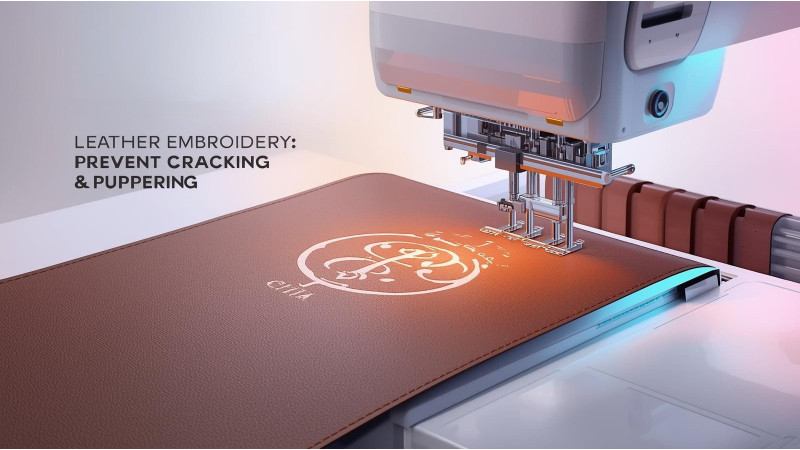
Leather Embroidery Without Cracking: Do’s and Don’ts
Embroidery on leather and vinyl requires special care to prevent cracking, puckering, and permanent damage. Leather is thick, non-stretchy, and sensitive to piercing, so standard embroidery techniques may not work. This guide explains the do’s and don’ts for successful leather embroidery, including stabilizer choice, needle selection, and machine settings.
Why Leather Cracks During Embroidery
Leather cracks when stitches are too dense, the wrong needle is used, or the material is hooped incorrectly. Common causes include:
- Using standard fabric needles
- Overly dense designs with tight satin columns
- Hooping the leather tightly, stretching it
- Skipping stabilizer or using tear-away on soft leather
Expert tips for leather embroidery can be found at Urban Threads: Embroidery on Leather and Coldesi: No Fear Leather Embroidery Tips.

Best Stabilizers for Leather
Leather needs firm support but cannot tolerate excessive needle penetration. Recommended stabilizers:
- Heavy cut-away stabilizer underneath
- Adhesive-backed stabilizer for temporary support
- Water-soluble topping for smooth finishes on vinyl and soft leather
More stabilizer advice at Gathering Thread: Leather Embroidery Tips
Needle and Thread Selection
- Use leather or sharp needles (size 90/14 recommended)
- Polyester thread for strength and minimal stretch
- Avoid thick threads for small, detailed designs
Step-by-step leather embroidery instructions: DigitizingMadeEasy: Embroidery on Leather & Vinyl
Hooping Techniques for Leather
- Do not hoop leather directly; float or use a stabilizer sandwich
- Use temporary adhesive to secure the material
- Avoid pulling or stretching the leather
More hooping techniques: LeatherNeo: How to Do Embroidery on Leather
Digitizing Tips for Leather
- Reduce stitch density to prevent piercing damage
- Use light underlay for shape stabilization
- Break large fills into smaller areas
- Slow down the machine speed to reduce stress on the material
Video Tutorial
Watch leather embroidery in action: YouTube: Leather Embroidery Tips
Do’s and Don’ts for Leather Embroidery
Do’s
- Use proper leather or sharp needles
- Choose polyester thread for durability
- Hoop with stabilizer sandwich or float method
- Reduce stitch density for small details
- Test stitch on scrap leather first
Don’ts
- Avoid standard fabric needles
- Do not hoop tightly or stretch leather
- Never use heavy fill designs without testing
- Do not skip stabilizer, especially for soft or thin leather
- Avoid rapid machine speed on delicate areas
Conclusion
Embroidery on leather can look professional and last long if done carefully. Using the right needle, stabilizer, hooping technique, and digitizing adjustments prevents cracking, puckering, and distortion. Always test your designs on scrap material before starting the final project to ensure flawless results.
Related Products


Leave a comment