





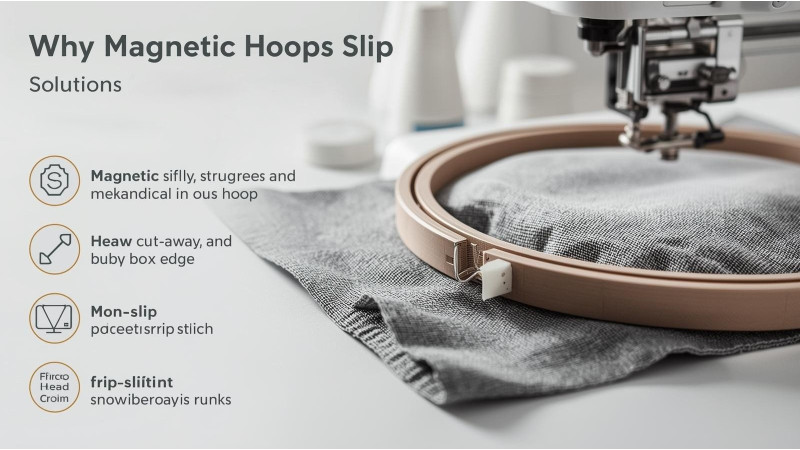
Why Magnetic Hoops Slip on Thick & Heavy Fabrics – Complete Professional Guide
Magnetic embroidery hoops have become a preferred choice for professionals across the USA, Canada, Europe, the Middle East, Russia, Africa, Australia, and Asia due to their ease of use and consistent fabric tension. Yet, when working with heavy, structured, or multilayered materials—such as quilted jackets, canvas totes, denim garments, insulated workwear, or multilayer hoodies—even premium hoops may struggle to maintain proper grip. This expanded guide explains the core reasons behind slippage and offers field-tested solutions suitable for high-precision commercial embroidery.
For a deeper understanding of how magnetic hoops operate and how different models behave, you can explore this comprehensive magnetic hoop guide , which outlines benefits, structural differences, and usage recommendations for professional embroidery machines.
Why Magnetic Hoops Slip on Heavy or Multi-Layer Fabrics
Magnetic hoops rely on magnetic compression to secure the fabric and stabilizer. While this compression is generally strong on thinner textiles, the effective clamping pressure decreases significantly as total material thickness increases. When hooping heavy denim, multi-layer quilted garments, marine vinyl, canvas, or padded jackets, several factors may trigger slippage:
- Excessive Material Bulk: Too many stabilizer layers or thick substrates reduce magnetic force efficiency.
- Uneven Hooping Surfaces: Seams, pockets, ribbing, or zipper plackets create raised zones that prevent a flush grip.
- Misaligned Magnets: If all magnets are not fully engaged, weak points form and the fabric creeps during stitching.
- High-Density Stitching: Heavy fill areas generate vibration and needle pull, increasing the likelihood of shifting.
If you frequently work with oversized jackets, blankets, or extra-large motifs, exploring specialized hoop options is helpful. The detailed guide on large-scale and extra-large hoops provides insights into hoop reinforcement, design sequencing, and best practices for oversized projects.
Professional Solutions to Prevent Magnetic Hoop Slippage
To achieve consistent, distortion-free results on complex fabrics, consider implementing the following best practices used by expert embroiderers worldwide:
- Choose the Correct Stabilizer: Use heavy-duty cut-away or firm tear-away specifically engineered for structured fabrics. Avoid stacking too many layers.
- Ensure Full Magnet Engagement: After hooping, manually verify that every magnet is locked in place and applying uniform pressure.
- Add Surface Friction: Wrapping the inner hoop ring with cotton twill tape or bias tape significantly increases friction and prevents creeping.
- Avoid Problem Areas: Never hoop directly over seams, pockets, or raised textures.
- Use Basting Stitches or Adhesive: A perimeter basting box or sticky stabilizer keeps layers fixed, especially for jackets or canvas materials.
- Use a Smaller Hoop When Possible: Smaller hoop fields create stronger pressure and more reliable hold.
- Reduce Machine Speed: Lower speeds minimize vibration and needle drag on high-density areas.
If you want to refine your fabric choice for hooping or understand how different materials behave under magnetic pressure, this practical guide on optimal fabric selection for hoop stability provides expert-level recommendations for both domestic and industrial environments.

Step-by-Step Hooping Workflow for Heavy Fabrics
- Prepare the Fabric: Press and smooth the surface to eliminate folds and texture inconsistencies.
- Select the Location: Choose the flattest possible zone, away from structural seams.
- Apply the Stabilizer: Use a firm stabilizer and add light adhesive spray if needed.
- Wrap the Inner Ring: Apply cotton tape to increase grip and prevent sliding.
- Hoop Carefully: Align grain lines and engage all magnets fully.
- Perform the Drum Test: Tap the hooped area. It should be drum-tight.
- Baste Before Stitching: A basting box secures layers during embroidery.
- Monitor During Stitching: In long runs, pause occasionally to check tension.
- Finish Cleanly: Remove stabilizer as recommended and inspect for distortion.
Supporting Video Resources for Better Clarity
If you prefer visual demonstrations, these expert video tutorials offer practical techniques worth integrating into your workflow:
- Tips for Magnetic Embroidery Hoops – Three Things at Three!
- Secure Fabrics in the Hoop Using Double-Sided Tape
- Turbo Tips for Small, Medium & Large Magnetic Hoops
Conclusion
Magnetic hoops are an excellent investment for professional embroiderers, but they require the right strategy when working with dense or multilayer textiles. By optimizing stabilizer selection, increasing hoop friction, avoiding uneven fabric areas, and using techniques like basting or adhesive support, you can consistently achieve clean, distortion-free results—even on the heaviest garments. With proper workflow and the right knowledge, you can confidently embroider anything from rugged canvas totes to padded winter coats with the precision expected by global markets.
Related Products
Leave a comment