





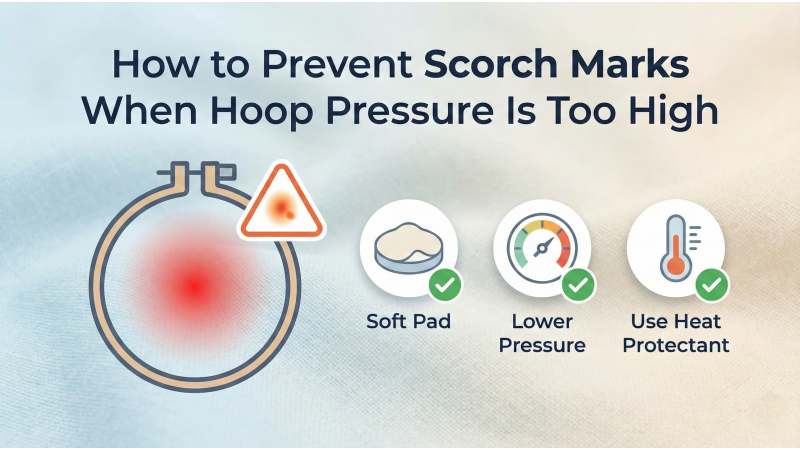
How to Prevent Scorch Marks When Embroidering on Delicate Fabrics
Embroidering on delicate fabrics such as silk, chiffon, velvet, and organza requires extra care. High heat, excessive friction, or improper stabilizers can leave scorch marks or shiny patches that ruin your design. This guide will help you stitch safely and professionally, incorporating tips from Maggie Frames’ ultimate stabilizer guide and Brother’s chiffon embroidery tips.
Why Scorch Marks Occur
Scorch marks happen when heat or pressure damages the fibers. Common causes include:
- Ironing directly on delicate fabrics without a protective layer
- High embroidery machine speed causing friction and heat buildup
- Using inappropriate stabilizers that trap heat
- Over-hooping, stretching the fabric during embroidery
Understanding how fabric type interacts with heat is essential. Kimberbell’s tips for delicate fabrics offer detailed insights.

Best Stabilizers for Delicate Fabrics
Use stabilizers that provide support without pressing too tightly against the fabric:
- Water-soluble topping to prevent stitches from sinking
- Lightweight cut-away for soft silk or satin
- Temporary adhesive-backed stabilizers for fabrics that are hard to hoop
Learn advanced stabilizer techniques for hand and machine embroidery in this comprehensive guide.
Hooping and Stitching Techniques
- Hoop the stabilizer only, float the fabric if necessary
- Do not stretch the fabric while hooping
- Slow down the machine speed to reduce heat from friction
- Use shorter stitch lengths for dense areas
Practical demonstrations for hooping chiffon and other delicate fabrics can be found in this video tutorial.
Needles and Threads
- Use fine needles (70/10 or 75/11) to prevent fabric perforation
- Use polyester or fine rayon threads suitable for delicate fibers
- Test on a scrap piece before starting the main fabric
For expert needle selection on delicate fabrics, see this visual guide.
Pressing and Finishing
- Always cover embroidery with a pressing cloth before ironing
- Use low heat and gentle steam
- Do not press directly on stitches
- Lift the hoop gently and avoid rubbing the stitched area
Watch this tutorial video for safe pressing and finishing techniques on delicate embroidered fabrics.
Other Tips and Tricks
- Always test on a scrap fabric first
- Consider using light adhesive sprays to hold the fabric in place
- Adjust tension to match delicate fabric requirements
- Avoid unnecessary friction during stitching and handling
Additional tips for smooth embroidery on chiffon and similar fabrics are available in Brother’s embroidery blog, while Kimberbell provides key insights on handling fine fibers without damage.
Conclusion
Preventing scorch marks on delicate fabrics requires careful stabilizer choice, correct hooping, proper needle and thread selection, and slow, controlled stitching. Following these techniques ensures your embroidery remains pristine, professional, and damage-free. Utilize resources from Maggie Frames and video tutorials for visual guidance to enhance your results.
Related Products

Leave a comment