





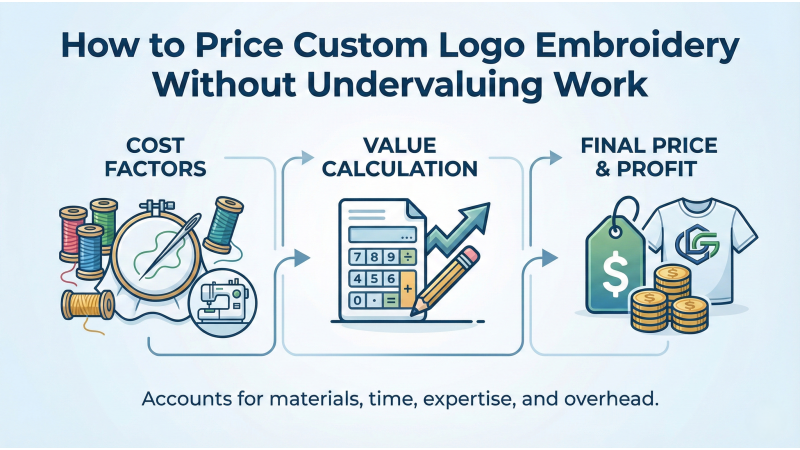
How to Price Custom Logo Embroidery Without Undervaluing Your Work
Pricing custom logo embroidery is one of the toughest challenges in the embroidery business. Too low, and your profit leaks away unseen; too high, and clients drift toward cheaper competitors. A balanced pricing strategy comes from understanding every component involved — from stitch density to labour, machine time to finishing. Many business owners begin by reviewing practical breakdowns such as this detailed guide on embroidery charges per stitch, which helps set a baseline structure.
Digitizing remains another core factor in pricing. Reviewing how design conversion is handled on professional platforms, such as the services listed at EmbDesignTube’s digitizing service, gives clarity on what customers expect and what you should charge for logo conversions.
A major piece of embroidery pricing also depends on understanding the true cost of machine usage. Resources like this machine hour rate calculation guide help you calculate the exact operating expense of your embroidery machine per hour — electricity, depreciation, maintenance, and productivity rate combined.
For visual learners, this helpful breakdown on YouTube — how embroidery costs are calculated — illustrates real examples of stitch pricing, machine time, and labour handling.
If you want deeper industry formulas, the embroidery cost calculation process provides detailed inputs on materials, consumables, hourly wages, and overhead factors. These guides create the groundwork for accurate, scalable pricing.
1. Calculate the True Cost of Production
The first step in profitable pricing is to identify every cost involved in producing a logo embroidery order. This includes:
- Thread consumption, stabilizer/backing material, and topping
- Machine wear, maintenance, and electricity cost
- Digitizing and logo preparation
- Hooping time, test stitching, trimming, and finishing
- Labour — your time or an employee’s hourly rate
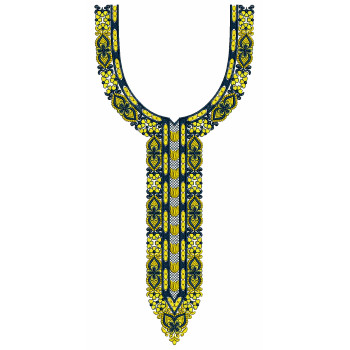
Different garment types also influence cost. For example, if a customer requests a detailed neckline logo, referencing styles like Indian neck embroidery designs can help estimate stitch density, stabilizer layers, and difficulty. Similarly, pricing will differ if you're embroidering appliqué-based logos inspired by designs from appliqué motif libraries.
2. Use Stitch-Count or Machine-Time Based Pricing
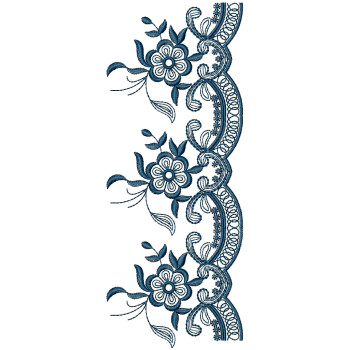
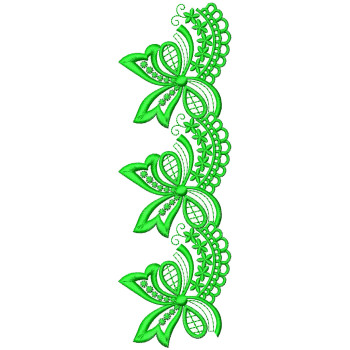
Most professional embroiderers charge per 1,000 stitches or per machine-minute. This keeps the pricing fair for both simple and complex logos. Light outline-style designs — similar to many lace patterns — take less time, so they cost less. Meanwhile, dense borders inspired by heavy border designs require more thread, more time, and higher stabilizer usage.
Cultural or luxury-focused orders such as Agbada-style embroidery or Macedonian caftan embroidery involve long stitch runs, metallic threads, and precision placement — all of which must be priced accordingly.
3. Add Extra Charges for Complexity or Special Materials
Special fabrics, multiple layers, textured garments, and metallic threads all require special handling. Intricate designs like full blouse sets or detailed blouse embroidery patterns almost always need stabilizer reinforcement and slower sewing speeds. Similarly, creative menswear requests, such as elaborate men’s neck embroidery, may require additional hooping and trimming time.
Non-fabric items — like logo embroidery on footwear — demand a skill adjustment fee because the machine setup differs drastically. For example, stitching logos on sneakers or fabric shoes resembles working with shoe embroidery patterns, which require thicker needles, foam support, and lower machine speed.
4. Include Finishing, Quality Check & Overheads
Finishing is often underestimated. The time required for steaming, trimming threads, removing stabilizer, ironing, and packaging must be billed. This is especially true for dense and repetitive patterns like all-over garment embroidery or full dress patterns similar to the layouts in dress collections. These require detailed inspection and additional finishing time.
Even small items like daman patches inspired by daman embroidery sets or festive outfits like ballroom Anarkali designs need careful cleanup.
5. Offer Tiered Pricing and Minimum Order Policies
A structured pricing model makes your embroidery business stable. Standard pricing applies to regular orders, while bulk orders receive discounted rates. For instance, if a boutique requests embroidered cushion sets similar to cushion embroidery patterns, bulk pricing becomes appropriate.
High-end collections such as those seen in exclusive embroidery design collections often involve multiple items per order, making tiered pricing profitable.
6. Transparent Quoting & Customer Communication
Customers appreciate clarity. Always break down the quote into stitch count, materials, speciality threads, finishing labor, and machine time. When customers request large batches — such as bulk appliqué designs, bulk neck embroidery, big border bulk orders, or bulk lace sets — transparency builds trust and encourages long-term collaboration.
Similarly, when tailoring blouse pieces in batches like those in bulk blouse designs, or handling garment construction elements like kali bulk patterns, clear communication ensures you are paid correctly for complexity and labour.
Full-fabric embroidery orders, often similar to all-over bulk embroidery layouts, require more machine time, higher stabilizer use, and longer finishing — all of which must be explained in quotes.
7. Review and Update Your Pricing Periodically
Embroidery material costs rise every year — thread, needles, stabilizer, electricity, and labour all change over time. Reviewing your pricing structure every 3–6 months ensures your profit margin stays healthy.
Quick Example Pricing Formula
Here is a simple baseline model for embroidery pricing:
- Base rate: ₹100 per 1,000 stitches or machine-minute rate
- Material surcharge: ₹25–₹50 for metallic thread, heavy stabilizer, or specialty materials
- Finishing & Labour Fee: ₹50–₹100 depending on garment type
- Minimum Setup Fee: Applied to all small orders
This structure keeps every embroidery job profitable, whether it’s a small logo or a large multi-piece bulk order.
Leave a comment