





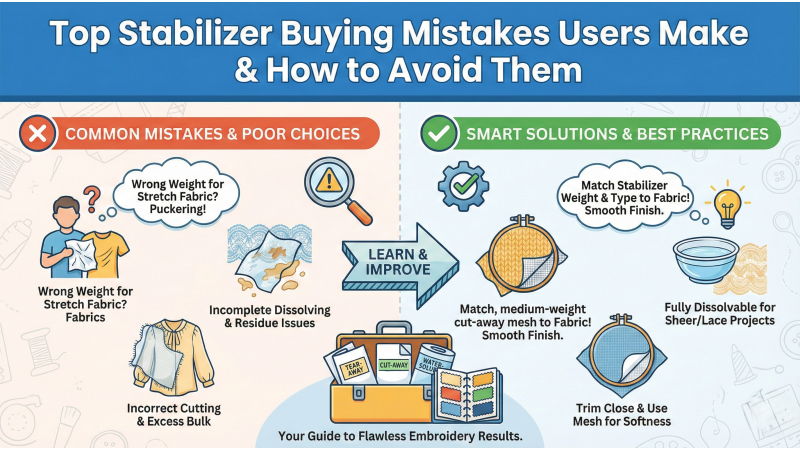
Top Stabilizer Buying Mistakes Users Make & How to Avoid Them
Choosing the right stabilizer is the quiet architecture beneath every embroidery project. When you pick the wrong type, weight, or structure, the fabric shifts, puckers, sinks, or warps — turning a beautiful design into a distorted shadow of what it could be. But the good news? Stabilizer mistakes are entirely avoidable once you know what to look for.
Whether you're stitching hobby projects or handling bulk production, understanding stabilizer selection will save you money, time, and frustration. This expanded guide walks you through the most common mistakes and teaches you how to choose stabilizers with confidence.
Why Choosing the Right Stabilizer Matters
A stabilizer is essentially the ground floor of embroidery — it keeps stitches upright, supports fabric during penetration, and prevents movement while the needle dances. The right stabilizer strengthens; the wrong one sabotages silently.
If you want a visual breakdown of how stabilizer choices impact stitch quality, this helpful video offers a clear demonstration: Understanding Stabilizer Basics (Video).
Mistake 1: Buying Tearaway for Stretchy or Knit Fabrics
Why it’s wrong: Tearaway lacks the structural support knits need. As soon as the garment stretches or the design pulls, stitches warp, creating puckers or wavy outlines.
How to avoid: Always use cutaway for anything that stretches — T-shirts, hoodies, sportswear, baby clothing, and rib-knit fabrics.
For a hands-on demonstration of stabilizer choice on knits, this tutorial is extremely helpful: Stabilizing Knits the Right Way (Video).
Mistake 2: Ignoring Stabilizer Weight (GSM) — Too Light or Too Heavy
Why it’s wrong: GSM determines stability. Too light results in fabric movement and puckering. Too heavy makes garments stiff or causes backing to show through.
How to avoid:
- 30–60 GSM: delicate fabrics
- 60–100 GSM: everyday garments (shirts, polos)
- 100+ GSM: caps, canvas, jackets, denim
Testing density and GSM combination is easier when you visually compare stabilizer behavior. This video is a great reference: Choosing the Right Stabilizer Weight (Video).
Mistake 3: Buying One Stabilizer for Every Job
Why it’s wrong: No single stabilizer can handle knits, leather, caps, sheers, fleece, and canvas equally. Using just one type leads to inconsistent results.
How to avoid: Maintain a small, versatile stabilizer kit:
- No-show mesh
- Light cutaway
- Heavy cutaway
- Medium/heavy tearaway
- Water-soluble topping (WSS)
- Adhesive or sticky stabilizer
You can find clear stabilizer categories and usage breakdowns directly on EmbDesignTube.
Mistake 4: Not Testing Stabilizer with Your Design & Thread
Why it’s wrong: A stabilizer might behave differently depending on thread weight, stitch density, or fabric type. Assuming one-size-fits-all leads to preventable failures.
How to avoid: Always do a small test run on the same fabric, using the same stabilizer and hooping technique. This reveals movement, puckering, and how the backing behaves once cut or torn.

Mistake 5: Overlooking Adhesive/Sticky Stabilizers for Slippery or Padded Items
Why it’s wrong: Fabrics like nylon, satin, quilts, leatherette, and padded items slide inside the hoop. Standard stabilizers won’t grip them enough, leading to drifting stitches.
How to avoid: Use adhesive stabilizers or temporary spray adhesives. These lock fabric in place and eliminate shift during stitching.
Mistake 6: Buying Unknown or Cheap Brands Without Checking Specs
Why it’s wrong: Cheap stabilizers often have inconsistent fiber density, unpredictable tearing, or glue residues that can damage garments or machines.
How to avoid:
- Buy established brands.
- Check GSM and stabilizer type (cutaway, tearaway, WSS).
- Order sample packs before committing to a roll.
Mistake 7: Not Considering the End-User Comfort
Why it’s wrong: Heavy cutaways left inside shirts or baby garments can scratch or irritate skin.
How to avoid: Choose soft cutaways, trim extra backing close to stitches, or apply soft cover films to sensitive areas.
Mistake 8: Forgetting About Water-Soluble Topping & Cover Films
Why it’s wrong: Without a topper, textured materials like fleece, terry towels, and velvets swallow stitches, creating uneven or sunken designs.
How to avoid: Apply water-soluble topping (WSS) for any high-pile fabric. Dissolve or peel as recommended.
Quick Stabilizer Buying Checklist
- Fabric type: knit, woven, sheer, pile, leather.
- Design density: light, medium, or heavy fill.
- Backing type needed: tearaway, cutaway, WSS.
- Adhesive/sticky requirement?
- Always test before production.
Recommended Stabilizer Combos (Real Examples)
- T-shirts / Polos (Knit): Medium cutaway + WSS topper.
- Baby Clothing: Soft cutaway + cover film or brushed backing.
- Caps: Heavy cutaway + tearaway or hot-melt layer.
- Sheer Fabrics: Water-soluble stabilizer + lightweight backing.
- Canvas / Backpacks: Heavy tearaway + adhesive stabilizer.
Testing, Storage & Handling Tips
- Stitch a test on the same fabric and thread.
- Store stabilizers flat, away from humidity.
- Label rolls with type and GSM for quick selection.
- Keep test swatches attached to rolls for comparison.
Final Thoughts
Stabilizer mistakes cost more in ruined garments than the stabilizer itself. By understanding fabric behavior, design density, and stabilizer structure, you can avoid costly errors and elevate every project with consistent, durable stitching.
For expanded tutorials, product recommendations, and advanced stabilizer techniques, explore more on the EmbDesignTube Blog.
Leave a comment