





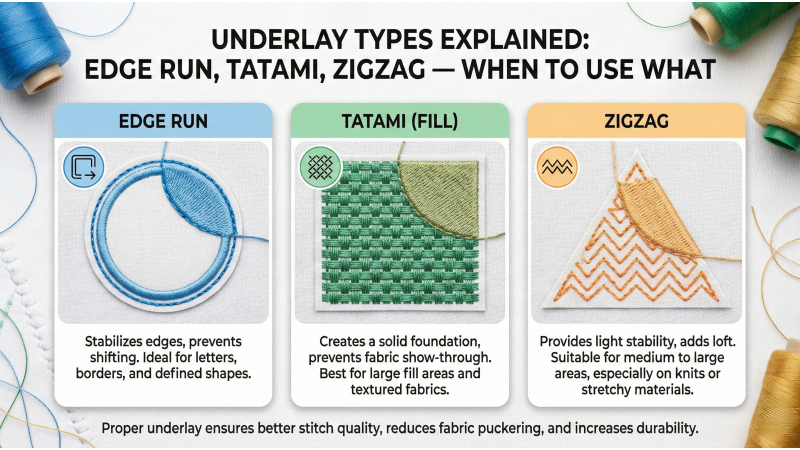
Underlay Types Explained: Edge Run, Tatami, Zigzag — When to Use What
Underlay stitches are the quiet architecture beneath every polished embroidery design. They’re rarely seen, yet they control everything — stability, clarity, texture, and even how confidently an embroidery machine moves from stitch to stitch. When chosen wisely, underlay transforms your work from “just okay” to professionally refined. Many digitizers first grasp this idea after watching practical demonstrations like this underlay-focused tutorial, where the unseen support layer becomes just as important as the top stitching.
Whether you're building satin columns, sculpting bold monograms, or filling large shapes, the underlay determines the smoothness and sharpness of the final embroidery. As explained clearly in this in-depth digitizing underlay guide, the secret to excellent quality lies in choosing an underlay type that cooperates with both the fabric and the final stitch type.
Why Underlay Matters
Underlay stabilizes the fabric, prepares the ground for top stitches, and ensures the design runs smoothly. It's your first defense against distortion and your most reliable tool for crisp detail. Underlay helps you:
- Prevent pull and distortion in satin and fill areas
- Reduce puckering on knits and stretchy fabrics
- Increase coverage and prevent fabric show-through
- Sharpen edges of small shapes, letters, and borders
- Create consistency and smoothness across the design
A broader explanation of these stabilizing effects can be found in this guide on how underlay improves embroidery quality, which highlights why choosing the right type is just as essential as selecting the correct density or stitch angle.
1. Edge Run Underlay
What Is Edge Run Underlay?
Edge Run is a delicate outline of stitches placed just inside the shape’s border. It’s a quiet guardian for small lettering and thin satin areas. In practical demonstrations like this satin-stitch explanation video, you can see how an Edge Run locks down the fabric and sharpens the final edge definition.
What It Does
- Creates a sharper border
- Anchors fabric to prevent shifting
- Improves clarity in small text
- Helps prevent fraying on delicate or loose-weave fabrics
Best Used For
- Small satin letters under 8 mm
- Narrow borders
- Fine script details
- Lightweight or slippery materials
When to Avoid
- Large fill areas
- Wide satin columns needing height or structure
2. Zigzag Underlay
What Is Zigzag Underlay?
Zigzag underlay is a wider, more open base that supports satin stitches from underneath. It adds loft, evens out density, and prepares the ground so your satin columns lay smooth instead of dipping unevenly. The benefits of this technique are often demonstrated in practical breakdowns such as this embroidery stability walkthrough.
What It Does
- Adds loft for smoother satin stitching
- Prevents dips, waves, and irregular surfaces
- Distributes density evenly
- Reduces gaps from fabric pull
Best Used For
- Wide satin columns (5 mm and above)
- Monograms and bold lettering
- Thick materials such as towels, fleece, or blankets
- Soft or stretchy fabrics that sink

When to Avoid
- Very thin satin shapes
- Small text where zigzag could distort the edges
3. Tatami (Fill) Underlay
What Is Tatami Underlay?
Tatami underlay is a light fill pattern that rests beneath large top-fill areas. It flattens and stabilizes the surface so the final layer stitches without inconsistencies. To explore deeper technical aspects, Wilcom’s documentation on Tatami underlay settings offers a more technical breakdown of how these fill foundations behave.
What It Does
- Creates a stable base for fill stitches
- Reduces fabric texture showing through
- Improves coverage and consistency
- Controls distortion on knits or stretchy fabric
Best Used For
- Large shapes requiring full fill coverage
- Backgrounds and broad design areas
- Knit or stretchy materials
- Shiny or slippery fabrics
When to Avoid
- Small satin details
- Designs that are already very dense
Choosing the Right Underlay
| Design Area | Recommended Underlay |
|---|---|
| Small Satin Letters | Edge Run |
| Wide Satin Areas | Zigzag + Edge Run Combo |
| Large Fill Areas | Tatami Underlay |
| Stretch Fabrics | Tatami or Zigzag |
| Fine Borders | Edge Run |
A more holistic overview of the full underlay family — including backing and stabilizers — is covered well in this complete underlay and backing guide.
Pro Tip
For premium satin work, many professionals rely on a hybrid approach: Edge Run for crisp edges + Zigzag for height and smoothness. This combination produces satin columns that look polished, even on tricky materials.
Common Underlay Mistakes
- Using too much underlay, causing stiffness
- Skipping underlay on knits, leading to sinking stitches
- Choosing the wrong underlay type for satin width
- Applying dense zigzag layers that add unnecessary bulk
Final Thoughts
Mastering underlay selection is one of the fastest ways to elevate your embroidery quality. Edge Run sharpens small details, Zigzag supports broad satin columns, and Tatami stabilizes large filled areas. With the right combination — grounded in both experience and trusted educational resources — you can produce embroidery designs that sew beautifully, run smoothly, and look consistently professional across any fabric.
Related Products

Leave a comment