





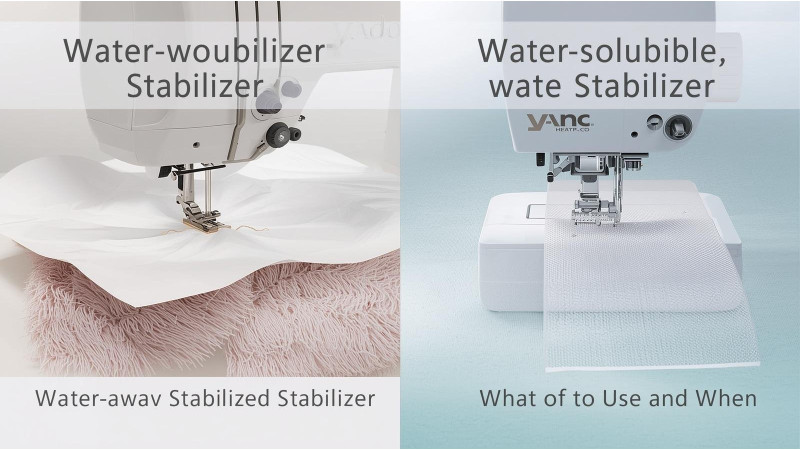
Water-Soluble vs Tear-Away Stabilizer: What to Use and When
Choosing the right stabilizer can make the difference between smooth, professional embroidery and puckering, distortion, or poorly supported stitches. Two of the most commonly used stabilizers—water-soluble and tear-away—serve very different purposes. Using the wrong one can result in messy outlines, uneven fill, loose satin stitches, or complete design collapse.
This guide explains exactly when to use each type and includes the expert links and videos you provided for deeper learning.
What Is Tear-Away Stabilizer?
Tear-away stabilizer is a paper-like backing that tears cleanly away from the finished design.
Use tear-away when you need:
- A light to medium level of support
- Temporary stabilization
- Fast removal without water
- Compatibility with stable woven fabrics
Best fabrics for tear-away:
- Cotton
- Denim
- Twill
- Canvas
- Non-stretch woven fabrics
Learn more from expert guides:
When NOT to Use Tear-Away
Tear-away is not suitable for:
- Stretch fabrics (knit, jersey, spandex)
- Dense designs
- Freestanding lace
- Thin satin stitches that require firm support
Using tear-away on stretchy fabrics leads to:
- Puckering
- Shifting
- Distorted outlines
- Gaps between fills
What Is Water-Soluble Stabilizer (WSS)?
Water-soluble stabilizer dissolves completely when rinsed with water. It can be used as a topper or a backing depending on the project.
Two Main Types:
- Film-type (topper) — for fuzzy, textured, or loosely woven surfaces
- Fabric-type (mesh-like) — for freestanding lace and free-standing structures
Learn more from these expert guides:
- Embroidery Legacy – How to Use Stabilizers
- Karlie Belle – Stabilizer Guide
- Ricoma – Stabilizer Guide
When to Use Water-Soluble Stabilizer
Use WSS as a Topper on:
- Towels
- Terry cloth
- Fleece
- Minky
- Velvet
- Any fabric with pile or texture
The topper prevents stitches from sinking into the fibers.
Use WSS as a Backing for:
- Freestanding lace (FSL)
- Freestanding appliqué
- 3D embroidery
- Cutwork
Because it dissolves fully, it leaves clean, free-standing threads.
Video Guides You Provided
Water-Soluble vs Tear-Away: Quick Comparison Table
| Feature | Water-Soluble Stabilizer | Tear-Away Stabilizer |
|---|---|---|
| Removal | Dissolves in water | Tears away cleanly |
| Best Use | FSL, textured fabrics, 3D work | Wovens, light support projects |
| Not Recommended For | Dense stitching on stretchy fabrics | Knits, stretch fabrics, lace |
| Support Level | Light to medium | Light to medium |
Final Recommendation
If you’re stitching on stable woven fabrics and want quick removal, choose tear-away. If you're stitching lace, textured materials, or need a clean, residue-free finish, choose water-soluble stabilizer.
And in many cases, you’ll use both—tear-away as the main backing and water-soluble as a topper for clean, sharp satin stitching.
Related Products
Leave a comment