





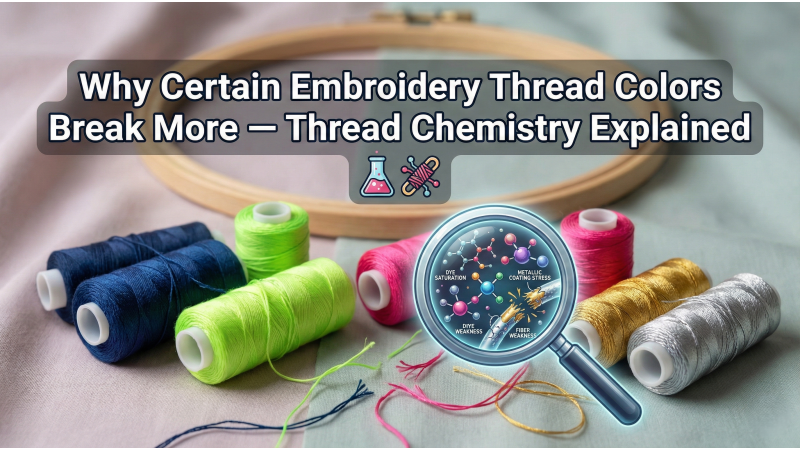
Why Certain Embroidery Thread Colors Break More — Thread Chemistry Explained
Have you ever noticed that certain thread colors break more often than others—especially red, black, metallic shades, and neon colors? This problem is not random. It’s caused by a combination of dye chemistry, density, fiber structure, and how different colors react to heat and friction during embroidery.
In this guide, we break down the science behind color-related thread breakage and show you how to fix it with machine settings, stabilizers, and technique adjustments. For more embroidery troubleshooting guides and downloadable designs, visit EmbDesignTube.com.
Why Certain Thread Colors Break More Easily
Thread color affects thread strength. The dyes used in manufacturing can change how the fibers behave under tension, heat, and friction. Here are the most common color groups that break more:
- Deep red tones (red, burgundy, maroon)
- Black
- Metallic shades
- Neon or fluorescent colors
- Very dark or heavily saturated colors
The reasons come down to chemistry, pigment weight, and how dyes bond to polyester or rayon thread.
Reason 1: Heavy Pigmentation Makes Threads Stiffer
Colors like red, black, and navy require higher dye concentration. More pigment means the dye layer becomes thick and stiff, reducing thread flexibility. When the thread passes through tension discs and needles at high speed, stiffness increases friction → friction causes breakage.
Reason 2: Certain Dye Chemicals Weaken Fibers
Some dye molecules penetrate polyester fibers more aggressively than others. Red and black dyes especially can dry out or weaken the filament, making the thread more brittle when stitched at high speed.
Reason 3: Metallic & Neon Threads Have Special Coatings
Metallic threads contain:
- a polyester core
- a metal foilwrap
- a lubricant coating
This structure makes them sensitive to heat and tension, causing frequent breaks.
Neon threads have fluorescent pigment coatings that reduce flexibility and make the thread more fragile.
Reason 4: Overdyeing Can Cause Uneven Thread Thickness
Deep colors often go through multiple dye cycles. This can create micro-variations in thickness, which lead to tension irregularities and sudden breaks during stitching.
How to Prevent Thread Breakage in Sensitive Colors
1. Lower Machine Speed (600–700 SPM)
Dark and heavily pigmented colors run smoother at lower speeds because they produce less friction in the needle path.
2. Reduce Upper Thread Tension
Loose the tension slightly to avoid stretching the thread beyond its strength limit. Make small adjustments (5–10 points).
3. Use Larger Needle Sizes
Try switching to:
- 75/11 for rayon
- 80/12 for polyester
- 90/14 for metallic or neon threads
The larger eye reduces friction and heat.
4. Use High-Quality Thread
Cheap dyed threads crack, peel, and break easily. Invest in consistent, high-grade polyester threads for dense colors.
5. Add Silicone Lubricant (Thread Conditioner)
A small amount of lubricant makes stiff thread smoother and reduces the chance of snapping during high-density stitching.
6. Use Longer Stitch Lengths for Metallic & Neon Colors
Short stitches strain delicate thread. Increasing stitch length by 0.2–0.4 mm can greatly reduce breakage.
Colors Most Likely to Break & Why
| Color | Why It Breaks |
|---|---|
| Red / Dark Red | Heavy dye load makes fiber stiff |
| Black | High pigmentation + fiber dryness |
| Neon Colors | Fluorescent coatings crack under tension |
| Metallic | Foil wrap overheats and splits |
| Navy / Dark Purple | Multiple dye cycles weaken fibers |
Final Thoughts
Certain thread colors break more often—it’s not your machine, it’s the chemistry behind the dyes. By adjusting speed, needle size, tension, and thread quality, you can run these colors smoothly without constant breaks.
For more machine troubleshooting and high-quality embroidery designs, visit EmbDesignTube.com.
Related Products
Leave a comment