





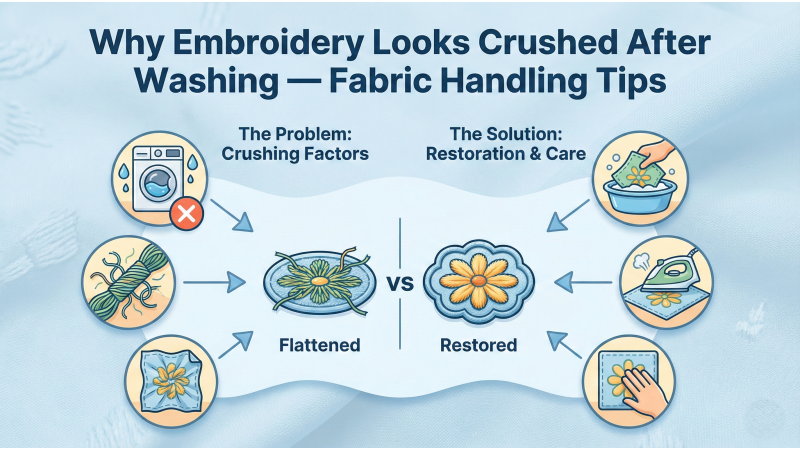
Why Embroidery Looks “Crushed” After Washing — Fabric Handling & Care Guide
Embroidery after its first wash can feel a bit like a proud sculpture that suddenly decided to nap — the stitches lose their loft, the fabric slumps, and the once-raised artwork looks unexpectedly subdued. This “crushed” effect isn’t a curse; it’s the predictable outcome of how fibers, stabilizers, and water behave together. Let’s wander through the important checkpoints that keep embroidery standing tall after every wash.
1. Choose the Right Stabilizer for Washable Embroidery
The backbone of any raised, professional embroidery is the stabilizer. When a piece is destined for repeated washing, stabilizer selection becomes a quiet hero. For most washable garments, medium cut-away stabilizers offer durable support that survives laundering without letting the design collapse into the fabric. You can explore detailed fabric-to-stabilizer matching guidance in this helpful resource from Bernina: Which Stabilizer for Which Material?.
2. Maintain Wash-Friendly Stitch Density
Dense embroidery behaves like a sponge — it soaks up water, gets heavy, and compresses the fibers beneath it. Reducing density slightly (without sacrificing coverage) keeps designs breathable and prevents them from flattening in the wash. If you’re working on pieces that need to be cleaned frequently, check density during digitizing to keep everything airy rather than iron-plate solid.

3. Hoop the Fabric Without Stretching Its Soul
A too-tight hoop can tug the fabric like a drumhead, only for it to relax after washing — leaving your embroidery looking sunken. Keeping the fabric tension balanced is essential. Adhesive sprays or sticky stabilizers can help tame slippery materials without over-stretching them. A practical embroidery-care tutorial here gives a broader understanding of how fabric behaves in different situations: How to Wash Embroidery Clothes.
4. Wash Embroidery with Gentle Care
Washing is where most embroidery loses its structure. The trick is to treat your stitched garment like a soft-spoken guest: cold water, gentle cycle, inside-out, and zero rough handling. This washing guideline from Sulky offers simple, solid advice on laundering threads the right way: How to Launder Embroidery Threads. If you work with Isacord or other polyester threads, their official care PDF explains wash limits and durability beautifully: Isacord Washing & Care Instructions.
For garments with delicate decorative work, Madeira’s professional care recommendations also provide deeper clarity: Washing Embroidered Garments. And if you ever need to clean hand-embroidery or mixed-fiber pieces, the guidance from DMC adds a gentle touch: Washing Finished Hand Embroidery.
5. Drying Matters More Than Most Think
Tumble dryers can flatten embroidery faster than a book pressing dried flowers. Air-drying preserves the elevation of the stitches — and avoids heat-compression that makes embroidery look older than it is.
6. Press with a Light, Thoughtful Hand
Ironing directly over embroidery is an invitation for flattening. Use a pressing cloth and steam lightly from the back. A puff of steam can coax flattened stitches back into shape — almost like waking them gently rather than stepping on them.
7. Learn Through Visual Demonstrations
Sometimes watching the process reveals details words can’t capture. These video guides show real-world washing and care techniques for embroidered garments:
- Video Guide: Washing Embroidered Clothes
- Video Guide: Protecting Embroidery After Laundering
- Video Guide: Stabilizer & Fabric-Care Tips
Conclusion
Embroidery only looks crushed after washing when stabilizer, density, fabric tension, or laundering methods work against each other. With mindful choices — the right stabilizer, breathable density, balanced hooping, gentle washing, and protective pressing — your embroidered designs stay raised, proud, and beautifully textured through every wash cycle. A little care turns every design into a long-lasting storyteller stitched into fabric rather than flattened by it.

Leave a comment