





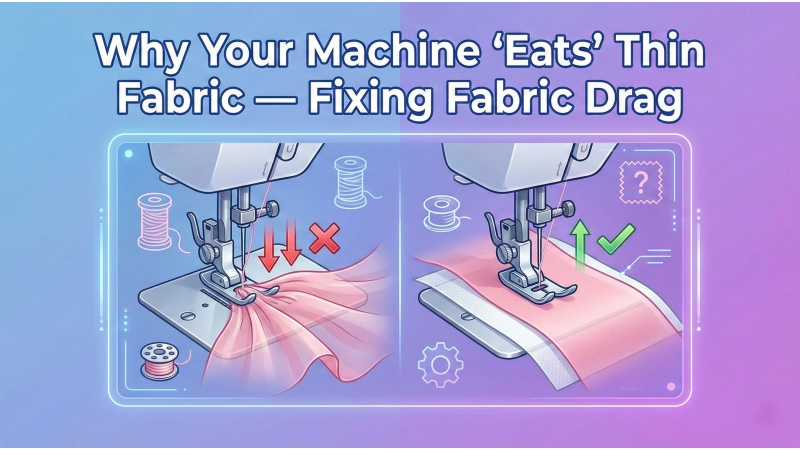
Why Your Machine “Eats” Thin Fabric — Complete Fixing Guide for Fabric Drag
Thin and delicate fabrics like chiffon, organza, georgette, rayon, viscose, and lightweight polyester often behave unpredictably under an embroidery needle. When the machine begins “eating” the fabric — pulling it down into the needle plate — it’s almost always due to stabilizer issues, hooping errors, oversized needles, excessive stitch density, or tension imbalance. The problem looks scary, but it is completely fixable with the right technique and setup. This guide explains the exact causes behind fabric drag and all the advanced solutions you need for perfect results on thin materials.
Before diving in, it helps to understand how fabric choice directly impacts embroidery behavior. Some fabrics are naturally unstable, some stretch heavily, and others collapse with needle pressure. Knowing what type of fabric you're working with is the first step toward preventing drag.
1. Using the Wrong Stabilizer for Thin Fabrics
Thin fabrics behave like unsupported nets — flexible, airy, and prone to sinking with needle motion. Tearaway stabilizer is usually too weak for this category because every needle strike weakens the fibers and allows thin materials to sink downward.
Instead, use:
- Cutaway stabilizer — The strongest foundation for delicate fabrics.
- No-show mesh — Lightweight yet supportive for sheer or semi-sheer textiles.
- Extra floating layer — Added underneath for extra support.
Fabrics such as organza or chiffon may also benefit from techniques shown in sheer fabric embroidery tutorials, which demonstrate specialized handling methods for extreme delicacy.
2. Fabric Not Hooped Firmly Enough
Even the best stabilizer fails if hoop tension is off. Thin fabrics require perfect, even tension — tight enough to prevent movement, but not stretched to distortion. When loosely hooped, thin fabric shifts with every needle strike, causing downward drag.
Correct hooping steps:
- Hoop fabric and stabilizer together.
- Ensure a flat, wrinkle-free surface.
- Use temporary adhesive spray for slip-prone fabrics.
- Apply painter’s tape at edges if fabric still moves.
For extremely thin materials, you may even hoop only the stabilizer and float the fabric — a method commonly used on sheers and lace.
3. Needle Too Large or Damaged
Needle size matters more than most embroiderers realize. A large or dull needle pushes delicate fabric downward instead of piercing cleanly. This creates tunnels, tearing, and sinking.
Use the smallest appropriate needles:
- 65/9: Ultra-delicate fabrics
- 70/10: Lightweight woven and poly fabrics
- Microtex: Sharp point for precision
For further clarity, explore the Microtex needle guide to understand how needle profiles help protect fragile materials.

4. Stitch Density Too High in the Design
Thin fabrics cannot handle dense stitching. When density is too high, the repeated needle strikes act like a drill. Wide satins, heavy fills, and auto-digitized patterns often cause excessive puncture stress.
To fix density issues:
- Reduce fill density by 10–25%
- Use lighter fills designed for thin materials
- Break long satin stitches into smaller segments
- Ensure proper underlay (edge-walk + zigzag)
Many machines also allow density override options, and you can preview behavior using test stitch-outs.
5. Bobbin Tension Pulling Fabric Downward
If bobbin tension is too tight, the top thread gets pulled downward aggressively, dragging the fabric with it. This is a common but overlooked cause of fabric sinking, especially on soft cloth.
Signs of tight bobbin tension:
- Bobbin thread visible on top
- Stitches look sunken or tight
- Fabric puckers slightly
Follow your machine’s official tension testing steps, like the procedures outlined in Brother’s sewing tension FAQ.
6. Not Using a Topping Layer on Ultra-Soft Fabrics
Water-soluble topping is extremely useful for thin fabrics because it prevents sinking at the needle entry point. Though typically used for towels, topping also stabilizes fine textiles.
- Supports stitches
- Prevents sinking
- Gives cleaner outlines
Secure it lightly with pins or adhesive spray.
7. Design Not Optimized for Thin Fabrics
A beautifully digitized design on denim may completely destroy chiffon. Thin fabrics require special digitizing rules:
- Lighter density
- Minimal underlay
- Run stitches instead of thick satin borders
- Larger stitch lengths
- No heavy fills unless necessary
Digitizing adjustments greatly influence stitch behavior and can prevent drag entirely.
8. Alternative Hooping for Extremely Delicate Fabrics
Some fabrics are too fragile to hoop. Options include:
- Hooping only the stabilizer and floating the fabric
- Using sticky-back stabilizer
- Running a basting outline around the design
These techniques protect sensitive fabrics from stretching or tearing during embroidery.
Video Reference for Visual Learners
For a clear visual explanation of thin fabric handling, watch this helpful tutorial: How to Embroider Delicate Fabrics (YouTube)
Final Thoughts
Fabric drag is not a machine defect — it's a setup issue. When you choose the correct stabilizer, hoop properly, select the right needle, set balanced tension, reduce density, apply topping, and optimize the design for thin fabrics, embroidery becomes smooth and flawless.
Master these techniques and even the most fragile fabrics will stitch beautifully without sinking, tearing, or distortion.
Leave a comment