





Why Magnetic Hoops Damage Some Fabrics — Safe Alternatives
Magnetic hoops have earned a devoted following in the embroidery world — they snap together with a satisfying click, tame bulky items, and eliminate the ritual of tightening screws until your fingers stage a protest. For thick, rigid, or awkward-to-hoop items, magnetic hoops feel like a small miracle. But the same magnetic strength that makes them helpful can also turn them into silent saboteurs when used on delicate fabrics.
In this 2025 expanded guide, we explore why magnetic hoops can bruise, distort, or permanently damage certain materials, and how to avoid those pitfalls with safer hooping alternatives. If you enjoy exploring creative, beginner-friendly embroidery projects, you might also enjoy browsing the Urban Threads design library for project inspiration that works beautifully with non-magnetic hooping.
Why Magnetic Hoops Damage Certain Fabrics
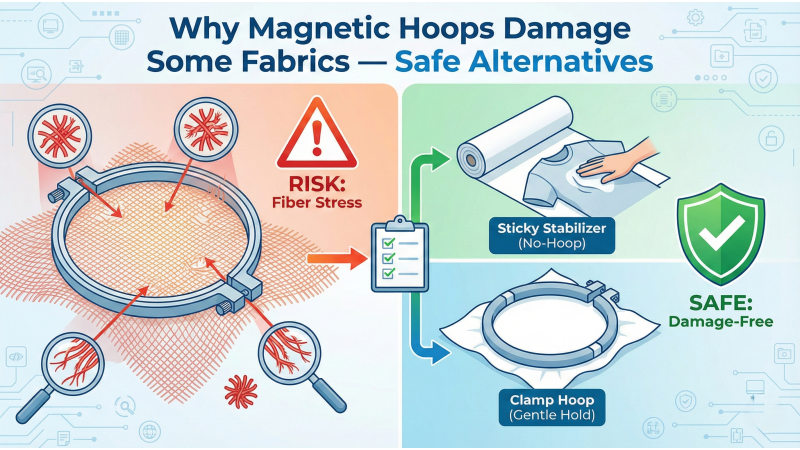
Magnetic hoops clamp fabric and stabilizer together using a concentrated force generated by strong rare-earth magnets. This is great when the fabric is thick enough to withstand that pressure — but delicate textiles often buckle under it. Below are the primary reasons magnetic hoops become problematic.
1. Excessive Compression on Delicate Fibers
When magnetic plates snap together, they apply intense pressure along the hoop edges. Delicate textiles simply weren’t built for such compression. Fibers can flatten, bruise, or in some cases, snap. Materials like silk, organza, rayon, fine knits, and lightweight polyester blends are especially vulnerable.
If you enjoy in-the-hoop projects that rely on keeping fabric crisp and mark-free, refer to this helpful guide: In-the-Hoop Needle Book. It’s a perfect example of a project where preserving fiber integrity matters.
2. Stretching and Distortion on Knits
Knits are elastic by nature, and magnets can stretch them unevenly the moment they snap shut. This creates crooked outlines, distorted shapes, and rippling fills. Once stretched past their limit, many knits never recover.
3. Hoop Burn & Imprint Marks
Magnetic hoops often leave deeper marks than traditional screw-tightened hoops because the pressure is stronger. Sensitive materials may develop shiny spots, deep indentations, or fiber bruising — sometimes permanent.
4. Stabilizer Shift Before the Snap
On slippery or lightweight fabrics, even a millimeter of movement before the magnets fully lock can result in misalignment, puckering, and outline drift.
5. Uneven Pressure Distribution
Magnetic hoops grip firmly at the edges but offer minimal tension across the center. Delicate fabrics need uniform support to avoid distortion — something magnets simply cannot provide.
When Magnetic Hoops Are Safe
Fortunately, not all fabrics fear the magnetic clamp. Thick, stable, or tightly woven materials handle magnetic pressure quite well. These include:
- Hoodies
- Denim
- Canvas
- Tote bags
- Unstructured caps
- Backpacks
If you're curious about broader project categories ideal for different hooping methods, the curated collection of Urban Threads embroidery projects offers an excellent overview of materials and techniques.
Fabrics You Should Never Use With Magnetic Hoops
Some textiles are simply incompatible with magnetic pressure, regardless of precautions:
- Silky synthetics (satin, charmeuse)
- Thin Lycra or Spandex
- Performance sportswear
- Soft baby clothing
- Sheer materials
- Rib knits and lightweight stretch fabrics
These fabrics distort easily and often retain hoop bruising permanently.
Safe Alternatives to Magnetic Hoops
Several hooping methods provide gentle, even pressure that protects delicate textiles from damage.
1. Traditional Embroidery Hoops
Classic screw-tightened hoops remain the safest for delicate fabrics because they allow gradual tension adjustment and even pressure distribution.
2. Clamp Hoops
Clamp hoops apply mechanical pressure without magnets, making them ideal for heavy canvas, denim, jackets, and bulky bags. They are also a great match for stabilizer-dependent projects.
For more clarity on proper frame handling and troubleshooting, the HoopMaster FAQ offers practical insight into hooping challenges and solutions.
3. Floating Method (No Fabric Hooped)
The floating method hoops only the stabilizer. The fabric is attached above using temporary adhesive spray or pins. This method is perfect for silk, knits, performance wear, and baby clothing.

4. Snap-Hoop or Multi-Frame Systems
Snap-hoops distribute pressure more evenly than traditional magnetic hoops, making them safer for medium-stretch fabrics and lightweight materials.
5. Adhesive Stabilizers
For extremely delicate fabrics, adhesive stabilizers eliminate the need for any hoop pressure. They prevent shifting while preserving the fabric surface.
Tips to Prevent Fabric Damage
- Always test on scrap fabric first
- Use cutaway stabilizers for stretchy materials
- Slow machine speed to reduce drag
- Avoid overtightening thin fabrics
- Align fabric grain properly before hooping
If you prefer a visual walkthrough, this helpful video demonstration breaks down hooping strategies that avoid fabric strain and distortion: Watch the tutorial on YouTube.
Final Thoughts
Magnetic hoops are powerful tools — but like many powerful tools, they require thoughtful use. Delicate, stretchy, or lightweight fabrics simply cannot withstand the concentrated pressure of magnetic frames. Choosing safer methods such as clamp hoops, floating techniques, snap frames, or adhesive stabilizers ensures your garments stay pristine while your stitches remain clean and precise.
And if you’re craving more embroidery inspiration beyond hooping, take a wander through creative design collections and project tutorials that pair beautifully with non-magnetic hooping techniques.
Leave a comment