





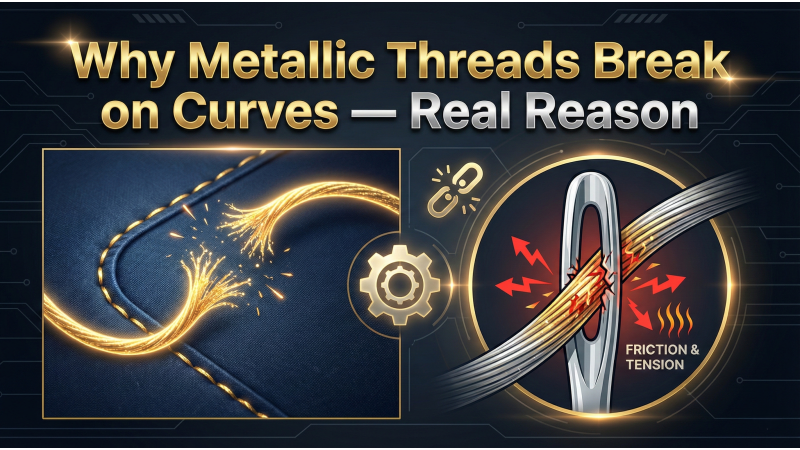
Why Metallic Threads Break on Curves — The Real Reason and Professional Fixes
Metallic thread embroidery is stunning, luxurious, and eye-catching — but anyone who has stitched with it knows how frustrating the constant thread breaks can be. Curves, circles, curls, and small decorative elements are especially challenging. While many embroiderers blame poor-quality thread, most breakage problems actually come from friction, tension, stitch path, and the unique foil-wrapped construction of metallic thread.
To fully understand why metallic thread behaves this way, it helps to study expert guides such as the metallic thread troubleshooting tutorial from Echidna Sewing, as well as practical industry advice like the metallic break-prevention guide by MaggieFrame Store. These resources confirm the same core truth: metallic thread does not behave like polyester or rayon, and designs with small curves must be digitized and stitched very differently.
For deeper technical insight, the Metal Thread Mastery guide from MaggieFrames offers excellent explanations about structure, friction points, and correct machine setup. Combined together, these references help us break down exactly why metallic thread fails — especially on curved stitching.
1. Metallic Thread Has a Stiff, Foil-Wrapped Structure
Metallic thread is made by wrapping delicate foil around a core fiber. This makes it behave more like a ribbon than a flexible, smooth thread. When stitching curves, the foil wrap bends sharply, causing microscopic cracks. Over time, these cracks widen and the thread snaps.
Videos such as the detailed breakdown in this YouTube demonstration show how the metallic wrap frays with repeated bends, clearly illustrating why tight circular stitching is high-risk.
2. Tight Curves Create Excessive Friction
Metallic thread rubs more aggressively against machine parts because the outer foil layer is not smooth like polyester. When your design is curve-heavy, every directional change increases friction. This produces heat, abrasion, and eventually shredding.
For a visual example of how curves increase drag, the stitch-path demonstrations in this stitch-angle training video show how thread tension spikes dramatically on curves versus straight paths.
3. Wrong Needle Type for Metallic Thread
Standard embroidery needles (75/11) have small eyes that scrape metallic thread. Metallic or topstitch needles have a larger, elongated eye designed to reduce friction and prevent shredding.
- Use size 90/14 metallic needles for heavy metallic threads.
- Use topstitch needles when metallic needles are unavailable.
- Replace dull needles frequently — foil catches easily on burrs.
This point is emphasized in this needle-selection tutorial, which demonstrates how needle eye size affects metallic flow through curves.

4. Machine Speed Too High for Metallic Threads
High stitching speed is a major cause of metallic thread breakage. At speeds above 700–800 stitches per minute, the thread undergoes extreme stress — especially during curve stitching.
Most professionals stitch metallic at 400–600 SPM, particularly on circular or ornate designs. You can see recommended speed comparisons in this metallic thread speed test video.
5. Tension Setup Too Tight
Metallic thread needs much looser tension than polyester. Tight tension stretches the foil beyond its limit, causing shredding on curves. A slightly loose top tension helps the foil glide smoothly through the needle and thread path.
If you notice looping, do not tighten the top tension. Instead, review bobbin balance or digitizing settings. This is explained clearly in this tension balancing guide.
6. Digitizing Not Optimized for Metallic Thread
Most embroidery designs are digitized for polyester thread. Metallic thread cannot survive tiny shapes, micro stitches, sharp corners, or dense patterns.
For metallic-friendly digitizing, always use:
- Longer stitch lengths (0.4–0.8 mm minimum)
- Reduced density
- Smoother curves with larger radiuses
- Balanced underlay that avoids repeated sharp turns
- Fewer tiny elements that force bending
A great example of how design simplification improves results can be seen in this metallic digitizing advice video.
7. Additional Tips for Metallic Thread Success
- Use silicone thread lubricant to prevent friction.
- Slow the machine during curves or small letters.
- Keep thread vertical to prevent twisting.
- Use stabilizers that minimize fabric movement.
- Use designs with fewer micro-turns.
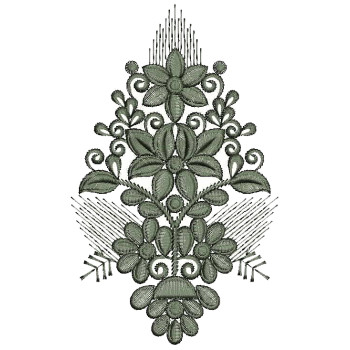
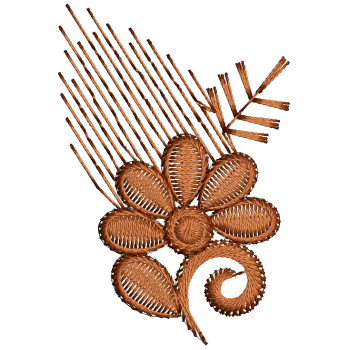
For those looking to practice metallic thread on aesthetic designs, explore applique and decorative pattern libraries such as:
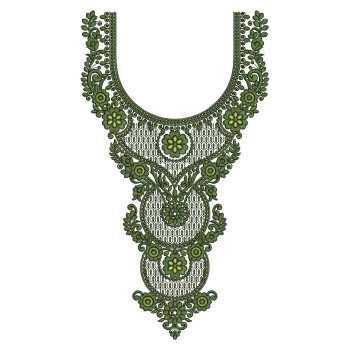
For larger embroidery projects suitable for metallic accents, you can explore:
Final Summary
Metallic thread breaks most often on curves due to its stiff foil-wrapped structure, high friction, incorrect needles, fast machine speeds, tight tension, and non-optimized digitizing. But once you adjust the design and machine setup — longer stitches, smoother curves, loose tension, metallic needles, reduced density, and slower speed — metallic thread becomes far more reliable.
With proper techniques and thoughtful digitizing, metallic thread can stitch beautifully even on complex curved designs, producing elegant, shimmering embroidery with minimal breakage.
Leave a comment