





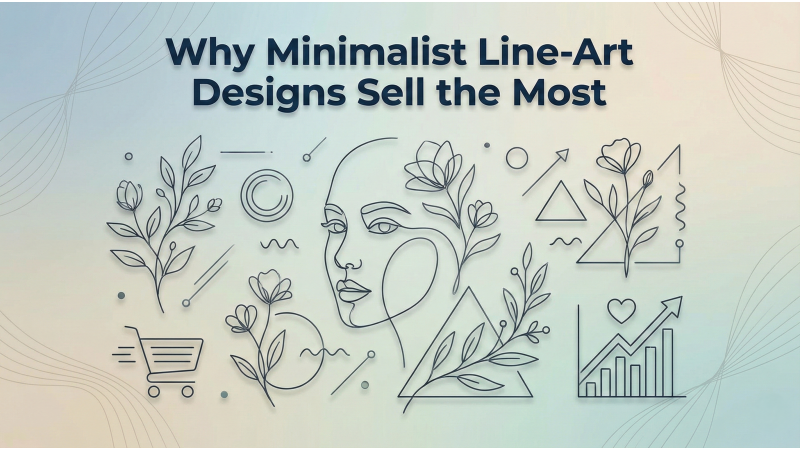
Why Minimalist Line-Art Designs Sell the Most
Minimalist line-art embroidery designs continue to dominate sales across marketplaces, custom orders, apparel brands, and lifestyle product categories in 2025. The rise of clean, elegant outlines isn’t a coincidence—it’s rooted in modern aesthetics, buyer psychology, and the practical advantages that simple line work brings to embroidery production. Whether you're a digitizer, shop owner, designer, or brand creator, understanding why minimal line-art performs so well can help you create products customers love.
Minimalism is trending not just in embroidery but also in global visual culture. Platforms like social media and online branding lean heavily toward simplicity—the same shift highlighted in the rise of minimalist illustration. This demand directly boosts the popularity of clean stitch styles across fashion, décor, and accessories.
1. Clean, Modern Aesthetics Are in High Demand
Minimalist designs blend naturally into modern product styling—neutral clothing, Scandinavian interiors, pastel fashion, and soft streetwear all pair beautifully with line-art embroidery. The trend is also supported by the global design community; even digital art movements such as those explained in the line-art design trend confirm how simplicity has become a universal language.
Modern buyers prefer designs that are versatile and visually calm. Whether it’s abstract shapes, simple botanical outlines, or elegant human silhouettes, minimalism appeals because it looks stylish without overwhelming the garment.
Many embroidery creators also draw inspiration from culturally expressive art forms such as the beautifully stylized African Masai women applique designs, which incorporate minimal line structures into meaningful visual storytelling.
2. Minimalist Designs Fit Every Fabric & Product
Clean-line embroidery works on everything—from T-shirts and hoodies to tote bags, linens, caps, and kidswear. Because line-art uses fewer stitches, it performs exceptionally well even on tricky fabrics like knits and stretch materials. For more playful projects, many embroiderers adapt minimal outlines into cute elements like the pieces found in cartoon embroidery collections, which provide simple shapes that stitch beautifully on all fabric types.
Minimal designs flow effortlessly on both textured and smooth materials, making them one of the most universally compatible embroidery categories.
3. Fast Stitching = Lower Cost + Higher Profit
Line-art designs have naturally low stitch counts, leading to:
- faster production time
- lower thread usage
- minimal thread breaks
- less wear on machines
- more orders completed per hour
For commercial embroidery shops, this means higher profit margins. Instead of spending 30 minutes stitching a dense fill design, minimalist artwork might finish in 5–8 minutes without compromising style or quality.
4. Customers Love Personalization in Minimal Style
One of the biggest reasons minimalist line-art sells so well is its perfect fit for personalization. Customers love clean outlines for:
- names and initials
- pet portraits
- birth flowers
- zodiac symbols
- silhouette representations
Minimalist silhouettes, as seen in collections like the elegant silhouette embroidery designs, skillfully capture personality with very few stitches. The simplicity feels premium, intentional, and modern.
5. Works Even in Small Sizes (High Readability)
One of the hardest challenges in embroidery is scaling designs down. Complex artworks often lose detail, fill gaps, or distort at small sizes. Minimalist line-art, however, maintains clarity even when it’s tiny.
This makes it perfect for:
- collars
- pockets
- sleeves
- caps
- babywear
- wrist-size patches
Small-size embroidery is a fast-growing niche, and crisp line-art dominates it.
6. Perfect for Trending Aesthetics
Current visual culture heavily favors clean, quiet imagery. As explained in why minimalist line-art is popular, the modern audience resonates with simplicity because it feels harmonious, relaxing, and aesthetically balanced.
Trends like Scandinavian minimalism, neutral-core styling, and monochrome streetwear amplify demand for clean embroidered outlines. Even geometric styles are thriving—the type often reflected in collections like geometrical embroidery designs, which combine symmetry with simplicity.
Minimalism also inspires creative cultural reinterpretations. If you're looking for something symbolic with a refined structure, try line-based cultural patterns such as Celtic embroidery patterns, which transform heritage designs into modern artwork.
7. Easy to Digitize (High Quality with Less Effort)
Digitizers enjoy working with minimalist line-art because:
- low density means fewer issues
- simple paths reduce travel stitches
- the design maintains shape on all fabrics
- editing requests are easy to fulfill
Since there are no heavy fills, problems like puckering, distortion, or thread nesting occur far less frequently. This also makes minimalist embroidery beginner-friendly for new digitizers.

8. Perfect for Brand Logos & Identity
Brands are increasingly choosing minimalist logos because they appear:
- modern
- premium
- timeless
- versatile across all product categories
A single-line face or abstract icon works well on hats, shirts, labels, patches, and packaging. The look remains consistent and clean across all placements.
9. Works with Any Color Palette
Minimalist designs are flexible with color use — monochrome, neutrals, bold shades, or soft pastels all work beautifully. Many designers even use metallic outlines for premium impact, or muted tones for subtle results.
Whether it’s black on white, soft beiges, or bold outlines, minimalist art adapts effortlessly.
Bonus: The Role of Media & Tutorials
The popularity of minimalist embroidery also grows thanks to content creators and tutorials online. Videos like this minimal line-art inspiration video encourage new embroiderers to explore simple outlines as a beginner-friendly style. The more creators share, the more people adopt the aesthetic—boosting marketplace demand.
Conclusion
Minimalist line-art designs sell the most because they meet modern expectations—simple aesthetics, fast stitching, fabric versatility, personalization potential, and high readability. They align with global design culture and offer unmatched production advantages for embroidery shops and digitizers.
As fashion continues to favor clean, understated art, minimalist embroidery will remain the top-selling style throughout 2025 and beyond.
If you want a full blog post on Best-Selling Minimal Line-Art Niches or How to Digitize Minimal Designs Perfectly, just tell me and I’ll create it in the same style!
Leave a comment