






Why Your Embroidery Design Looks Distorted: Top 10 Causes and Fixes
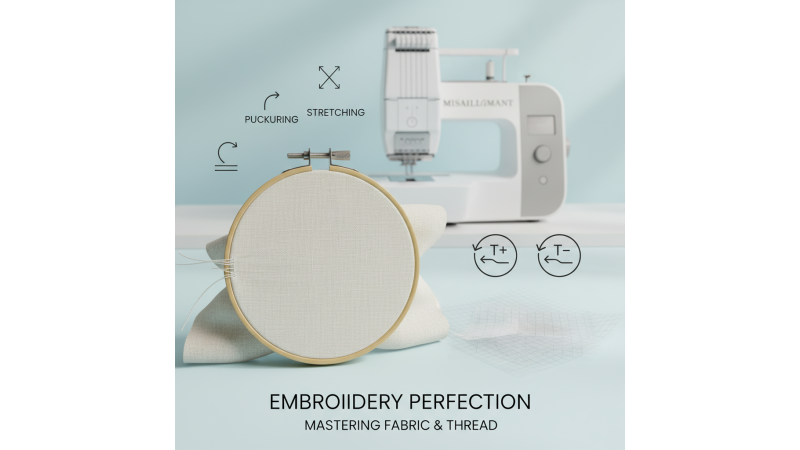
Embroidery distortion can feel discouraging, especially when your design looks flawless on-screen but turns unpredictable on fabric. Many embroiderers face issues like shifting outlines, stretched shapes, puckering, or uneven details. The good news? Most distortion problems come from just a few controllable factors. This detailed guide walks you through the top causes, real-world examples, and practical fixes—supported with helpful resources such as expert video demonstrations, common thread issue explanations, and trusted industry articles.
1. Incorrect Hooping Technique
Loose or uneven hooping is the most common reason designs shift or stretch during stitching. Even a tiny amount of movement can throw the whole design off, especially if you’re stitching fine lines or outlines.
Fix: Hoop the fabric firmly and evenly without wrinkles. Make sure the stabilizer and fabric act as one solid unit. For deeper troubleshooting, guides such as the one on avoiding hoop-related mistakes at Thread Collective also help identify subtle hooping errors beginners often miss.
2. Wrong Stabilizer Selection
Choosing the wrong stabilizer or not using enough support causes stretching, puckering, or misalignment. Dense designs stitched on delicate fabric without proper backing often distort severely.
Fix: Match stabilizer type to the fabric: cut-away for knits, tear-away for wovens, and additional layers for heavy-density designs. You can also learn about identifying embroidery quality issues by checking resources like Ricoma’s guide on bad embroidery signs, which includes stabilizer-related distortion.
3. Thread Tension Imbalance
Incorrect upper or bobbin tension leads to looping, pulling, gaps, and edge distortion. Many embroiderers chase distortion issues for weeks before realizing it was a simple tension imbalance.
Fix: Adjust tension gradually and test on scrap fabric. If you’re dealing with inconsistent thread output or breaks, the deep-dive thread issue explanation in this guide from Stitched From The Heart Creations can help solve common tension-related distortions.
4. Fabric Stretching During Hooping
Stretchy fabrics like jersey, Lycra, or rib knits distort the moment they’re stretched during hooping. Once unhooped, the fabric snaps back, altering the shape of the embroidery.
Fix: Do not stretch the fabric in the hoop. Float fabric when needed, and always pair stretchy materials with cut-away stabilizer. Watching demonstrations such as this hooping technique video can help visually correct hooping habits.
5. Poor Design Digitizing
Digitizing is the blueprint of embroidery. If the design has incorrect underlay, too much density, wrong stitch direction, or incorrect pull compensation, distortion becomes unavoidable.
Fix: Stick to professionally digitized designs when possible. Adjust density, underlay, and pull compensation for sensitive fabrics. Articles such as Thread Collective’s embroidery mistake guide also highlight common digitizing errors.
6. Wrong Needle Type or Size
A dull, bent, or incorrect needle type can snag fabric, cause dragging, or shift stitches during stitching—leading to distorted patterns.
Fix: Replace needles regularly. Use ballpoint needles for knits, sharp needles for wovens, and make sure your needle size matches the thread and fabric.
7. Machine Speed Too High
High-speed stitching increases vibration, reduces stitch accuracy, and allows even tightly hooped fabric to shift slightly. Dense or detailed designs are especially sensitive to high-speed distortion.
Fix: Slow down for complex or dense designs. You can also refer to video guides like this thread performance explanation at this YouTube tutorial to understand how speed affects thread and stitch quality.
8. Fabric Not Supported Properly
Delicate, light, or unstable fabrics collapse under dense stitching, causing wrinkles or stretched areas around the design. The wrong stabilizer only worsens the issue.
Fix: Add extra layers of stabilizer or use a topping like water-soluble film. Reviewing quality checkpoints in guides such as Ricoma’s embroidery troubleshooting article helps diagnose support-related distortion.
9. Improper Bobbin Setup
Poorly wound bobbins, uneven bobbin tension, or cheap bobbin thread can cause misalignment, looping, and shifting—often mistaken for hooping problems.
Fix: Use quality bobbin thread and maintain consistent tension. Pre-wound bobbins are recommended for best results.
10. Machine Maintenance Issues
A dusty thread path, clogged tension discs, lint buildup, or worn mechanical parts create irregular stitch motion that can pull the design out of shape.
Fix: Clean your machine regularly, replace needles, check the bobbin area, and lubricate when recommended. A practical breakdown of thread-path issues and maintenance signs is covered well in this resource from Stitched From The Heart Creations.
Conclusion
Embroidery distortion may come from hooping, stabilizer choice, digitizing, tension, or machine setup—but each issue has a clear and manageable fix. By applying proper technique, improving support materials, maintaining your machine, and learning from high-quality resources like Thread Collective’s mistake guide or the detailed insights shared in Ricoma’s troubleshooting blog, you can dramatically improve the accuracy and quality of your stitching. With consistent practice and the right knowledge, clean and professional-looking embroidery becomes your new normal.
Related Products

11-300x300h.jpg "Dupatta April 2017 Bulk Download | 50 Designs")
13-300x300h.jpg "Dupatta April 2017 Bulk Download | 50 Designs")
3-300x300h.jpg "Dupatta December 2016 Bulk Download | 50 Designs")
Leave a comment