





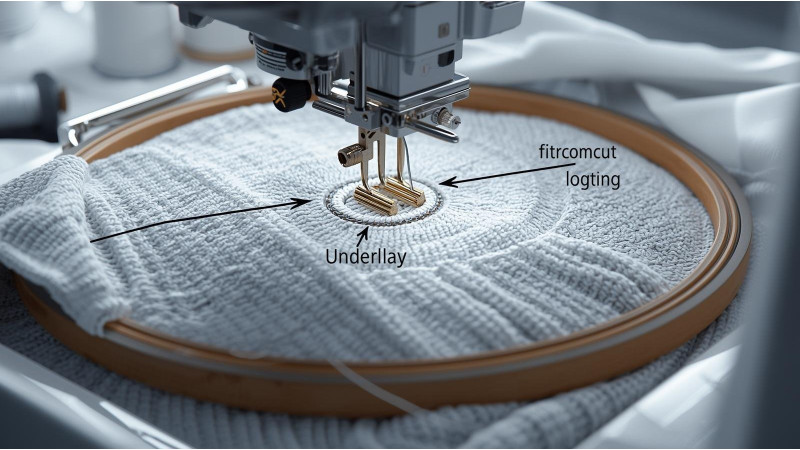
Embroidery on Knitwear: Avoid Loops, Gaps, and Stretch Pull
Knitwear behaves like a living creature—stretchy, responsive, unpredictable. Sweaters, hoodies, rib knits, and jerseys each carry their own quirks, and if you stitch on them without proper preparation, they push back with loops, gaps, tunneling, or distorted outlines. This extended guide walks you through stabilizers, hooping, density control, and repair methods, while naturally connecting you to helpful deep-dive resources across the embroidery community for even smoother stitching.
For a broader understanding of how knitwear behaves and how professionals prepare, you may also find this knitwear embroidery guide from Maggie Frames valuable before you begin.
Why Embroidery on Knitwear Is Difficult
The loops in knit fabrics can shift the moment your needle touches them. Because knits stretch in multiple directions, they can cause:
- Loops – When stitches don’t control the surface properly.
- Gaps or open stitching – The knit stretches while stitching.
- Tunneling – The fabric pulls inward under dense stitches.
- Distortion – Outlines stop matching the fill.
- Sunken stitches – Designs get swallowed by soft knits.
If you ever need to reshape or relax a stretched design, you can explore damp stretching techniques, which revive embroidery that has warped or waves after stitching.
Step-by-Step Fixes for Clean Embroidery on Knitwear
1. Use the Correct Stabilizer (Your Foundation of Success)
Stabilizer is the quiet hero behind every crisp knit embroidery. The universally recommended option is:
- Cut-away stabilizer — Essential for all knits.
- Medium cut-away — For lighter knits.
- Heavy cut-away — For sweaters and thick rib knits.
- Fuse-on cut-away — Excellent for jerseys that stretch aggressively.
Tear-away is never appropriate on knitwear because the fabric continues to stretch even after completion, slowly pulling your stitches apart.
2. Add a Water-Soluble Topping
Topping keeps your stitches from sinking into the loops of the knit. Use:
- Water-soluble topping film for smooth knits
- Heat-away film for highly textured sweaters
3. Reduce Stitch Density on All Knits
- Lower satin density by 10–20%
- Lower fill density by 15–25%
- Increase underlay instead of packing more top stitches
4. Use the Right Needle Type
The needle determines how gently the fabric is treated.
- Ballpoint needle – For all knits including rib knits and sweatshirts
- Sharp needle – Only for tightly woven sweatshirt fleece
- Recommended size: 75/11 Ballpoint
5. Hooping Technique: The Make-or-Break Step
- Hoop stabilizer and knit together to prevent shifting.
- Never stretch the knit while hooping — let it lie naturally.
- Use hoop grids or alignment tools for accuracy.
If your knit fabric has already been warped or pulled during hooping, basic repair methods—such as those covered in this embroidery mending beginners guide—can help recover both the garment and the embroidery.
6. Choose Proper Underlay to Control Movement
- Edge-walk underlay for outlines
- Zig-zag underlay for satin
- Tatami underlay for fill areas
7. Fix Gaps and Uneven Stitches With Correct Thread Tension
If your stitches look uneven or loose, bobbin tension is usually the culprit. You can follow visual demonstrations such as this bobbin tension guide to understand how tension affects knit embroidery.
8. Pick the Right Design for Knit Fabrics
- Use light, low-density designs.
- Prefer wider satin stitches instead of heavy fills.
- Avoid big blocks of dense stitching that compress stretchy fibers.
For visual comparisons of stitch behavior on knits, you can explore this demonstration on stitching on stretchy materials and a second helpful stitch-behavior review here.
When to Use a Knockdown Stitch
A knockdown stitch creates a soft, low-density layer that tames knit texture before the design begins. It’s perfect for:
- Chunky sweaters
- Fluffy, brushed knits
- Ribbed fabrics
This helps your embroidery sit like a clean emblem rather than sinking into the surface.
Final Checklist for Perfect Knit Embroidery
- ✔ Use cut-away stabilizer
- ✔ Apply topping film
- ✔ Lower density
- ✔ Use a ballpoint needle
- ✔ Avoid stretching fabric when hooping
- ✔ Choose strong underlay
- ✔ Test on scrap knit first
Once you apply the right stabilizer, hooping method, and density strategy, knitwear becomes one of the most forgiving and beautiful fabrics to embroider. Each stitch settles into place with confidence, creating durable, smooth, and professionally finished results.
Related Products



Leave a comment