





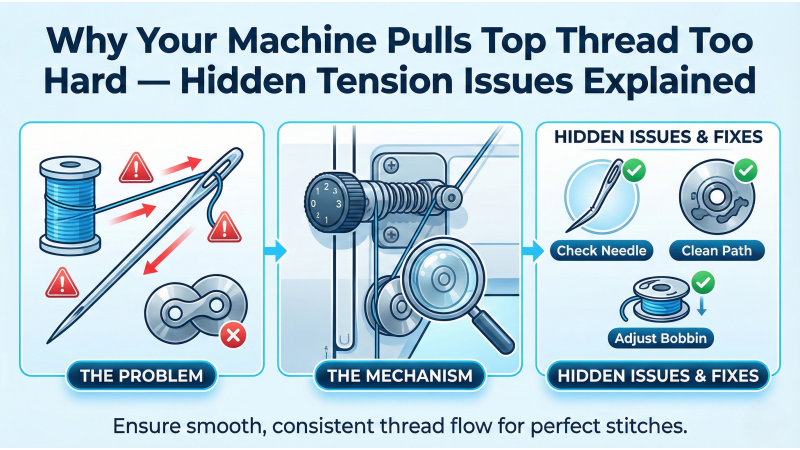
Why Your Machine Pulls Top Thread Too Hard — Hidden Tension Issues
When the embroidery machine pulls the top thread with the force of a stubborn kite fighting the wind, the stitches begin to complain. Thread snaps without warning, fabric puckers, needle movement feels stressed, and suddenly the design looks nothing like the elegant idea you had in mind. These symptoms are classic signs of hidden tension imbalance—problems that often stay invisible until your embroidery falls apart mid-stitch.
Even if your tension dial looks perfectly normal, internal friction, missed guides, poor-quality thread, incorrect bobbin settings, or dust trapped inside the tension discs can force the machine to pull the upper thread far harder than intended. This guide explores why hidden tension problems develop, how to identify the symptoms, and how to fix them with professional clarity.
Signs Your Machine Is Pulling the Top Thread Too Aggressively
Before adjusting anything, watch for the warning signals. These clues often appear early:
- Repeated thread breaks or shredding
- Stitches sinking unnaturally deep into the fabric
- Puckering around or across the design
- Bobbin thread surfacing at the top of the stitch line
- Needle wobbling, bending, or vibrating during stitching
- A harsh “pulling” or clicking sound from the tension system
If you recognize even two of these issues, the upper thread is likely being pulled too tightly—and the cause may be hiding somewhere along the thread path.
Common Hidden Causes of Tight Upper Thread Tension
1. Dust or Lint Inside the Tension Discs
Even a grain of lint wedged between tension discs can dramatically increase thread pressure. Cleaning this area with a thin card or unwaxed dental floss often restores smooth thread flow. For thorough tension diagnostics, guides like this tension troubleshooting article offer valuable cleaning techniques for maintaining consistent stitch quality.

2. Thread Not Fully Seated in the Tension Mechanism
When threading with the presser foot down, the tension discs remain closed—causing the thread to sit incorrectly. This leads to tight stitching and thread pulling. Always raise the presser foot before threading to allow the thread to fall naturally between the discs.
3. Missed Thread Guides or Incorrect Thread Path
Skipping a guide may seem harmless, but even one missing point increases friction. Extra resistance forces the tension system to compensate, pulling the thread harder. Many embroiderers discover this only after reviewing expert breakdowns like the thread-path insights from these longarm quilting tension tips.
4. Damaged, Old, or Low-Quality Thread
Old thread becomes brittle, dry, inconsistent in thickness, and prone to snapping. Damaged cones snag within guides, increasing tension. For guidance on proper thread selection and handling, refer to this complete embroidery thread guide.
5. Bobbin Tension Too Loose or Inconsistent
If the bobbin feeds thread too freely, the upper thread overcompensates by tightening aggressively. Balancing bobbin tension is critical for preventing upper-thread stress. This principle is covered thoroughly in the bobbin and tension adjustment instructions from this bobbin/upper tension guide.
6. Excess Internal Pull from the Take-Up Lever
If the take-up lever or adjacent thread guides have dust or friction buildup, they generate extra resistance. This makes the machine yank the thread harder with every stitch. Regular lubrication and cleaning help keep the mechanism smooth.
7. Incorrect Needle Type or Size
A thin needle on thick fabric creates drag, causing tension strain. A defective or bent needle also drags thread unnaturally during penetration. For understanding thread behavior, fraying, and needle impact, this fraying/breaking troubleshooting guide provides excellent reference.
8. Poor Thread Quality or Improper Storage
Quality matters. Inconsistent thread thickness or poorly wound cones often cause sudden tension spikes. A great overview of how and why thread breaks—often mistaken as tension issues—is explained in this thread breakage article.
9. Excess Stitch Density in the Design
Dense designs naturally create more pull. If the design contains too many stitches in a small area, the thread becomes overstrained. Density control and design compatibility are well demonstrated in this digitizing and design resource.
10. Very High Machine Speed
High stitching speed increases friction, heat, and thread tension. Reducing speed to 500–650 SPM on detailed or dense designs protects both the needle and the thread. Practical demonstrations of thread behavior under different speeds can be observed in this helpful video tutorial.
How to Fix Tight Top Thread Tension (Guaranteed Methods)
1. Loosen the Upper Thread Tension Gradually
Adjust the upper tension dial in small increments. Too much adjustment creates imbalanced stitches. Test after every tiny turn until the stitches look balanced and the bobbin thread no longer appears on top.
2. Perform a Bobbin Drop Test
Hold the bobbin case and let the bobbin hang. It should slide down slowly when you jerk your wrist lightly. If it drops too quickly, tighten the screw; if it doesn’t move at all, loosen it slightly. Balanced bobbin tension prevents upper-thread overpulling.
3. Clean All Thread Path Points
- Tension discs
- Upper thread guides
- Take-up lever
- Needle bar area
Clean regularly to avoid invisible friction buildup that often becomes mistaken for tension imbalance.
4. Switch to a New Thread Cone
If you’ve cleaned, rethreaded, and adjusted tension but still have problems, test with a new cone. Poor thread quality often mimics tension failure.
5. Use a Pre-Tension Guide (If Your Machine Has One)
Pre-tension mechanisms regulate thread flow before reaching the main tension discs. This reduces sudden tightness and improves thread stability.
6. Reduce Stitch Density in the Design
Excessively dense stitching pulls thread aggressively. Lighten the density or add underlay for smoother performance. Many digitizing guides emphasize density balance because it directly affects tension behavior.
Final Thoughts
When your machine pulls the top thread too hard, the real culprit is usually hidden: dust in tension discs, incorrect threading, tight guides, poor thread quality, or imbalanced bobbin tension. Once you clean the path, rethread correctly, regulate the bobbin, and balance your design settings, your embroidery will glide smoothly again.
Strong, balanced tension is the heartbeat of perfect embroidery—and now you have the tools to keep it steady.

Leave a comment