





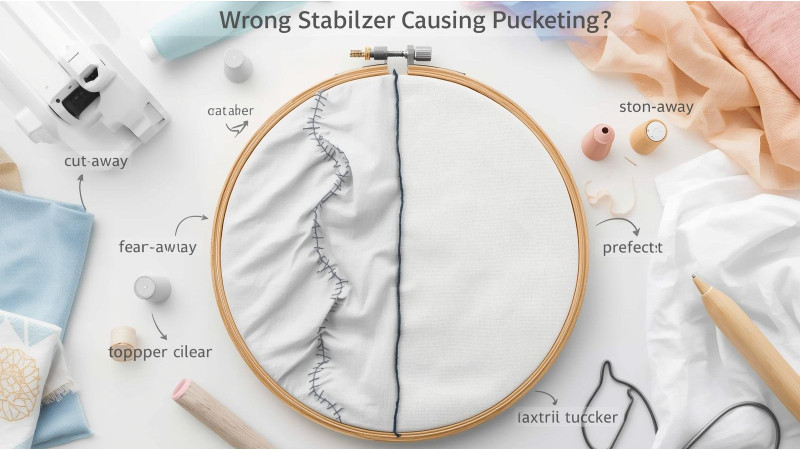
Wrong Stabilizer Causing Puckering? How to Choose the Right Type
Puckering—that frustrating wrinkling or bunching around your stitches—is often caused by using the wrong stabilizer. In this guide, we’ll explore why stabilizer choice matters, the common stabilizer types, and how to choose the right one so your embroidery stays smooth and flat.
Why Stabilizer Choice Is Critical
A stabilizer acts as the foundation for your embroidery, keeping the fabric stable and preventing shifting or stretching under the needle. As the experts at Ricoma explain, incorrect stabilizer or wrong hooping can easily lead to puckering, even on cotton or stable fabrics.
Using a lightweight or inappropriate stabilizer for heavy fabrics or dense designs usually results in puckering, distortion, or poor stitch definition.
Common Stabilizer Types & When to Use Them
- Cut-Away Stabilizer: Ideal for stretchy fabrics (knits, T-shirts, sweatshirts) or dense/large designs. It remains in the garment for long-term stability.
- Tear-Away Stabilizer: Best for stable woven fabrics like cotton, linen, and denim, or when the design is simple and lightweight. Note that this is generally not suitable for stretchy fabrics.
- Wash-Away Stabilizer: Recommended for delicate, sheer, or high-texture fabrics (lace, chiffon, towels, fleece). It dissolves after stitching, leaving no backing visible.
- Iron-On / Fusible Stabilizer: Good for thin knits, jerseys, or lightweight slippery fabrics where added structure helps prevent shifting.
- Toppers / Water-Soluble Film (on top): Useful when stitching on high-pile, textured, or napped fabrics (fleece, terry, sweaters) to prevent stitches from sinking and causing puckers.
How to Choose the Right Stabilizer — Quick Reference
Match your stabilizer to both your fabric type and design density/size. As a rule of thumb:
| Fabric / Use Case | Recommended Stabilizer |
|---|---|
| Stretchy knits, T-shirts, sweatshirts, athletic wear | Medium or heavy cut-away |
| Stable woven fabrics — cotton, linen, canvas, denim | Light or medium tear-away |
| Sheer, delicate, lace, towels, fleece | Wash-away (with optional topper for textured fabrics) |
| Thin knits or slippery fabrics (jersey, rayon, silk-like) | Fusible / Iron-on stabilizer |
| High-pile or textured fabrics (towels, fleece, napped fabrics) | Cut-away or wash-away + topper |

Common Mistakes That Cause Puckering
Even with the correct stabilizer, mistakes in technique can still lead to puckering. FineryEmbroidery outlines practical tips to minimize these errors, which include:
- Improper hooping: Fabric should be taut but not stretched. Over-tightening or uneven hooping tension often leads to distortion or puckering once the hoop is removed.
- Stitch density too high: Dense designs on lightweight fabrics pull fabric inward. You may need to reduce density or use a heavier stabilizer.
- Incorrect thread tension: 360DigitizingSolutions lists this as a common error; too much top-thread tension pulls the fabric and causes puckers, so always test on scrap first.
- No topping on textured fabrics: Without a topper, stitches may sink and cause pulling on napped or high-pile surfaces.
- Using tear-away on stretchy fabric: Tear-away offers no stretch resistance, which often leads to puckering on knits.
Pro Tips to Prevent Puckering
For a flawless finish, HoopTalent suggests mastering a few key techniques:
- Pre-wash, dry, and press your fabric before embroidery to remove sizing and reduce shrinkage or distortion later.
- Hoop fabric and stabilizer together, using temporary spray adhesive or basting stitches if needed—especially for slippery or stretchy fabrics.
- Test stitch on scrap fabric first. This lets you fine-tune stabilizer choice, hooping tension, stitch density, and thread tension.
- Use a water-soluble topper on high-pile or textured fabrics to keep stitches on top and avoid sinking.
Visual Learning Resources
If you prefer watching the process in action, you can view this quick tip on avoiding show-through or this guide specifically on preventing puckering using stabilizer.
Conclusion
In most cases, puckering isn’t a mystery—it’s a sign that the stabilizer, hooping, or stitch settings need adjustment. By matching your stabilizer type and weight to your fabric and design, hooping carefully, and testing before final stitching, you can avoid puckering and produce embroidery that lies flat, clean, and professional-looking.
For a compilation of these expert tips and to easily compare stabilizers before you stitch, you can visit embdesigntube.com. With the right preparation, your next embroidery project should look flawless.
Related Products


Leave a comment