





0
118
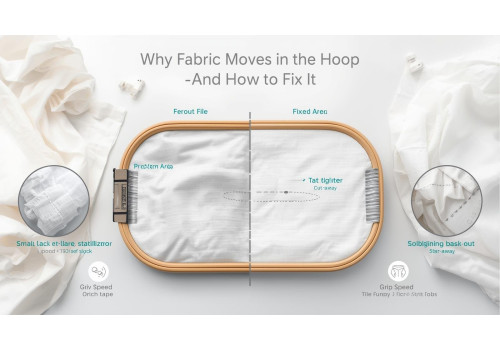
Why Your Fabric Moves in the Hoop and How to Correct It
Fabric movement inside the hoop is one of the biggest reasons for puckering, misalig..
0
72
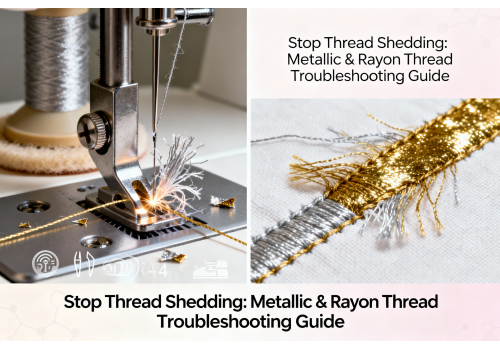
How to Stop Thread Shedding When Using Metallic or Rayon Threads
How to Stop Thread Shedding When Using Metallic or Rayon Threads
Metallic an..
0
143
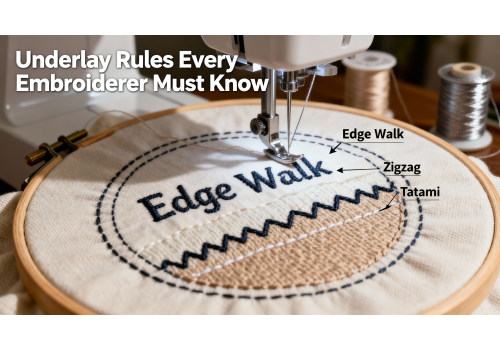
Underlay Rules Every Embroiderer Must Know to Improve Embroidery Design Quality
Underlay Rules Every Embroiderer Must Know to Fix Design Qual..
0
72
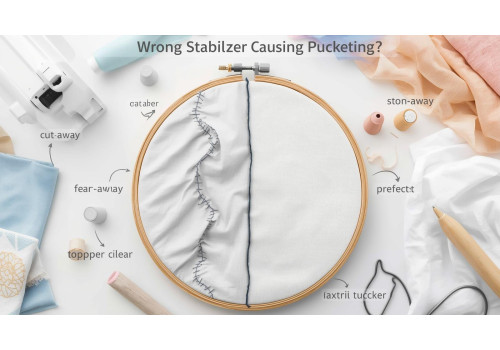
Wrong Stabilizer Causing Puckering? How to Choose the Right Type
Puckering—that frustrating wrinkling or bunching around your stitches—is often cause..
0
132
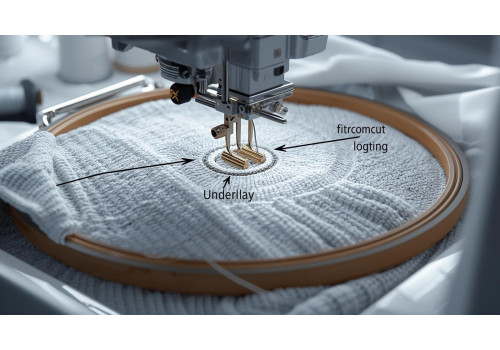
Embroidery on Knitwear: Avoid Loops, Gaps, and Stretch Pull
Knitwear behaves like a living creature—stretchy, responsive, unpredictable. Sweaters, ho..
0
76
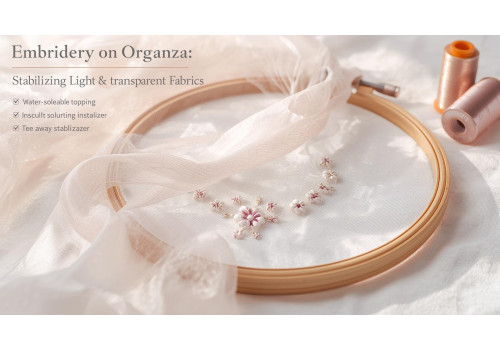
Embroidery on Organza: Stabilizing Light & Transparent Fabrics
Organza is a delicate, transparent fabric that offers elegance and beauty in embroider..
0
50
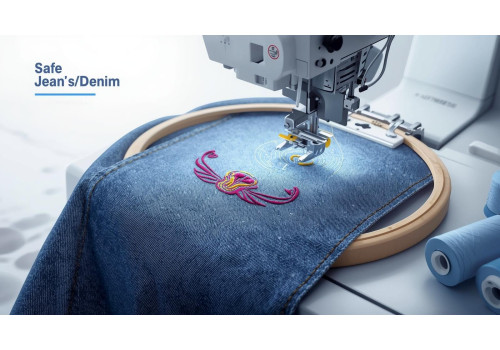
Embroidery on Denim: Avoid Thread Breaks and Needle Wear
Denim is a thick, durable fabric, but its heavy weave can create challenges for machine embr..
0
60
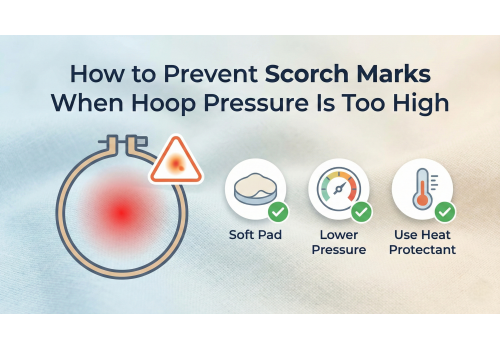
How to Prevent Scorch Marks When Embroidering on Delicate Fabrics
Embroidering on delicate fabrics such as silk, chiffon, velvet, and organza require..
0
169
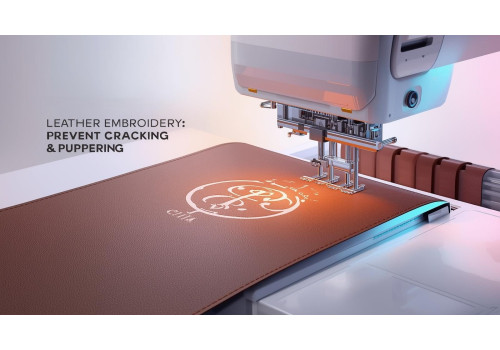
Leather Embroidery Without Cracking: Do’s and Don’ts
Embroidery on leather and vinyl requires special care to prevent cracking, puckering, and perman..
0
64
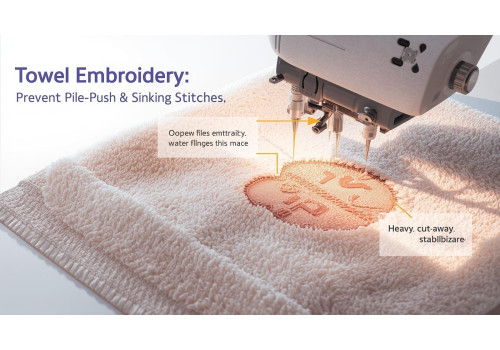
Towel Embroidery Issues: Prevent Pile Push and Sinking Stitches
Embroidering on towels and other terry cloth fabrics can be tricky due to the pile, l..
0
54
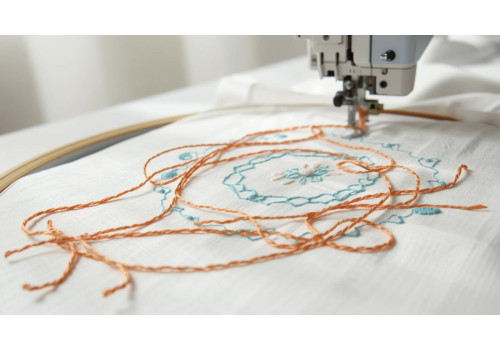
Thread Trimming Points Missing? How to Clean Up Bad Digitizing
One of the most noticeable signs of poor digitizing is missing thread trimming points...
0
47
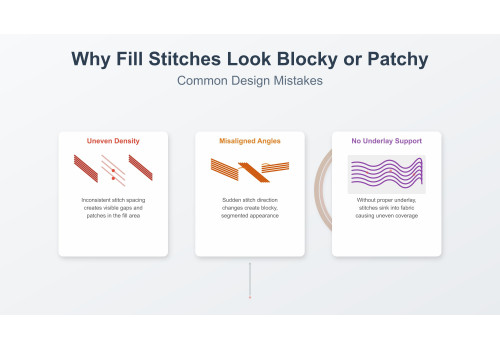
Why Fill Stitches Look Blocky or Patchy — Common Design Mistakes
Fill stitches are the backbone of large embroidery areas. When digitized correctly..